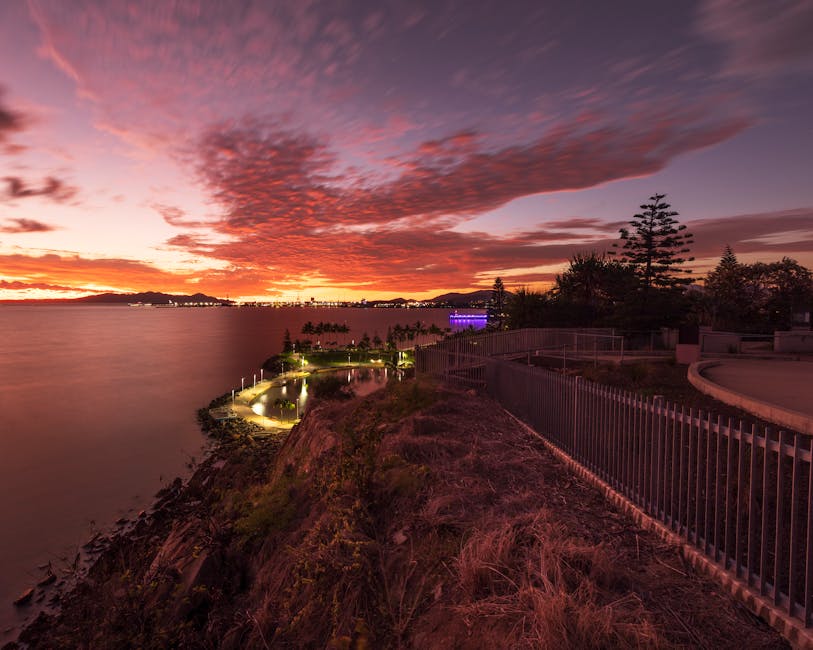
Townsville gets overlooked. In the standard GBR itinerary — Cairns, Port Douglas, maybe the Whitsundays — Queensland’s largest northern city rarely features, which is a loss for visitors and a mild source of civic frustration for the 180,000 people who live there.
I’ve spent a lot of time in Townsville over the years, initially because of James Cook University’s marine science programs and later because I kept finding reasons to return. The city has a particular character — unpretentious, practical, with a directness that tropical Queensland seems to encourage — and it sits at the centre of a stretch of GBR coast that contains two of the best dive experiences in Australia.
The SS Yongala
The Yongala is the reason many divers come to Townsville, and the reason is legitimate. She sank in 1911 in a cyclone with 122 people aboard, was lost for nearly 50 years, and now lies at 14–28 metres in the waters south of Townsville — so colonised by a century of marine life that she hardly looks like a ship anymore.
What makes the Yongala extraordinary is not the wreck itself — it’s the life density. Bull sharks patrol the superstructure. Enormous Queensland grouper occupy the holds. Sea snakes move through the structure in improbable numbers. Giant trevally circle in permanent schools. The wreck is not a ghost — it is alive in a way that makes the word seem inadequate.
Dive operators from Townsville (Adrenalin Snorkel and Dive, Remote Area Dive) and from Ayr on the Burdekin run day trips and liveaboards. The Yongala is approximately two hours by boat from Townsville, exposed to open-water swells and currents that can make diving challenging — operators cancel when conditions don’t meet standards.
Check real traveller reviews, prices, availability, departure points, and flexible booking options in one place.
Magnetic Island
Twenty minutes by ferry from Townsville’s ferry terminal, Magnetic Island is one of the GBR region’s most underrated destinations. Half of the island is national park — steep granite hills covered in hoop pines, with walking tracks ranging from easy beach-to-beach strolls to the long Forts Walk, a former WWII military lookout with views over the Coral Sea.
Geoffrey Bay, on the island’s eastern coast, has a shore dive that produces reliable encounters with tawny nurse sharks, sea turtles, and cuttlefish — accessible to Open Water divers and reachable by public ferry. Horseshoe Bay is the social centre of the island; Alma Bay, smaller and quieter, is one of the most beautiful beaches in Queensland, flanked by granite boulders that hold warmth into the evening.
The Museum of Tropical Queensland
Townsville’s Museum of Tropical Queensland houses the remains of HMS Pandora — the ship sent to capture the Bounty mutineers that sank on the Great Barrier Reef in 1791. The exhibition is genuinely excellent, covering maritime history that connects Townsville directly to the reef’s role in Australian history.
Reef HQ, adjacent to the museum, is the world’s largest living coral reef aquarium — essentially a section of reef transported into a controlled environment. For visitors who want to understand what they’re looking at before they go offshore, it’s a valuable orientation.
When to Visit
Townsville’s climate is drier than Cairns — it sits in a rain shadow that keeps humidity more manageable. The dry season (May–October) is the best time for the Yongala. The Marine Stinger season (October–May) affects coastal swimming but not offshore diving, since reputable operators require stinger suits in this period.
Compare top-rated tours, prices, availability, and real traveller reviews before booking. See what’s actually available for your dates and departure location.
Compare tours and check availability