Coral gardens often become the places travelers remember most clearly after visiting a reef. These sections of the reef are usually neither the shallowest flats nor the deepest slopes. Instead they occupy the middle ground where coral colonies grow closely together, forming dense clusters of color and structure beneath the water.
From the surface coral gardens appear as darker patches within bright lagoons. Sand channels curve between them, creating pale ribbons that separate one coral cluster from another. At first glance the pattern looks almost random. But after swimming slowly across these areas, the structure begins to make sense.
Each coral formation functions like a small neighborhood within the reef.
Fish gather around specific coral heads, returning repeatedly to the same places. Some species rarely move more than a few meters from the coral structures that provide shelter and food.
The First Moments in the Water
Entering a coral garden usually begins in relatively shallow water. The sand beneath the swimmer reflects sunlight upward, illuminating the entire reef environment. Visibility is often excellent because the water above the reef platform remains calm.
At first the coral formations may appear quiet. Small fish move cautiously among the coral branches, but larger species remain difficult to see.
After a few minutes of floating quietly above the reef, activity begins to emerge.
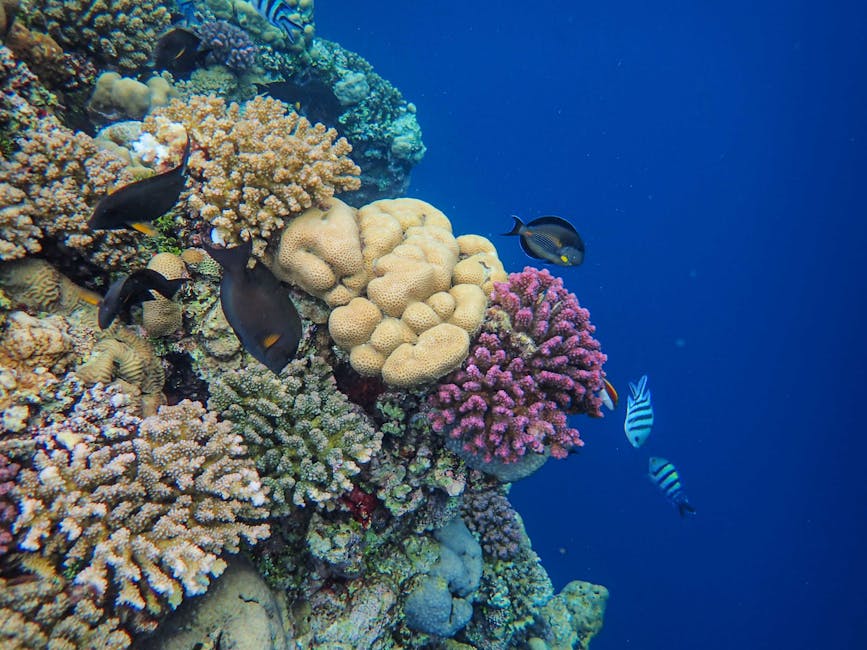
Damselfish dart between coral heads defending small territories. Parrotfish graze slowly across coral surfaces, leaving faint trails of sand behind them. Groups of chromis hover above branching coral structures, shifting direction together whenever a shadow passes overhead.
What initially seemed still begins to feel full of movement.
The Structure of a Coral Garden
Coral gardens rarely consist of a single type of coral. Instead they form complex mixtures of different coral species growing side by side. Rounded coral colonies sit beside branching structures that resemble underwater trees. Plate corals extend outward in layered shelves.
These shapes influence how fish move through the reef. Some species prefer the narrow spaces within branching coral where predators cannot follow. Others remain near the outer edges where open water allows them to react quickly to movement.
Swimming slowly across the reef reveals how these coral shapes form natural corridors and hiding places.
Small sand patches between coral heads act as open spaces where rays occasionally settle. These areas also make it easier for snorkelers to navigate through the reef without disturbing delicate coral structures.
Light Moving Across the Reef
One of the most striking features of coral gardens is the way sunlight moves across the reef surface. Because the water remains relatively shallow, light reaches the coral colonies clearly.
When the sea surface is calm, ripples in the water create shifting patterns of light across the coral. Bright bands drift slowly across the reef floor, illuminating different coral structures moment by moment.
This movement makes the reef appear almost alive even before fish enter the scene.
Photographers often describe these light patterns as one of the most beautiful aspects of shallow reef environments.
The Slow Swim
Moving slowly across a coral garden is usually the best way to observe its details. Fast swimming tends to scatter fish and disturb the natural rhythm of the reef.
Floating quietly allows marine life to resume normal behavior. Fish return to their feeding patterns and begin moving through the coral as if the observer were not present.
During these calm moments it becomes possible to notice smaller creatures that might otherwise remain invisible. Tiny shrimp hide within coral crevices. Cleaner fish hover above coral heads waiting for larger fish to approach.
Occasionally a small octopus reveals itself briefly before disappearing again into the reef structure.
Transitions Toward the Reef Edge
Many coral gardens eventually lead toward deeper sections of the reef. As swimmers approach the outer edge of the coral clusters, the water begins darkening slightly.
The coral formations thin out, and larger spaces of sand appear between them. Fish activity sometimes increases in these transition areas where currents begin moving more strongly.
Looking beyond the coral gardens often reveals the beginning of the reef slope, where the reef descends into deeper ocean water.
This gradual shift from coral garden to reef wall highlights how varied reef environments can be within a short distance.
Sounds Beneath the Water
While snorkeling across coral gardens, many people become aware of the faint sounds produced by the reef itself. Small clicking noises often echo through the water.
These sounds come from tiny crustaceans and other reef creatures moving within the coral structures. The reef produces a constant background of subtle noise that becomes noticeable once swimmers stop moving.
Listening to these quiet sounds while floating above the reef adds another dimension to the experience.
The reef becomes not only something to see, but something to hear.
Leaving the Coral Garden
Eventually swimmers drift beyond the coral clusters toward more open water. Looking back across the reef reveals how densely packed the coral formations were.
From a distance the coral garden appears almost like a patchwork of color beneath the surface. Individual coral heads blend together into a textured landscape.
Returning to the beach after crossing these reefs often leaves the impression of having traveled through an underwater forest.
The longer one spends moving slowly across coral gardens, the more the reef reveals its quiet complexity.
What first appeared as a simple patch of coral gradually becomes an entire living landscape shaped by light, current, and the countless small creatures that inhabit it.