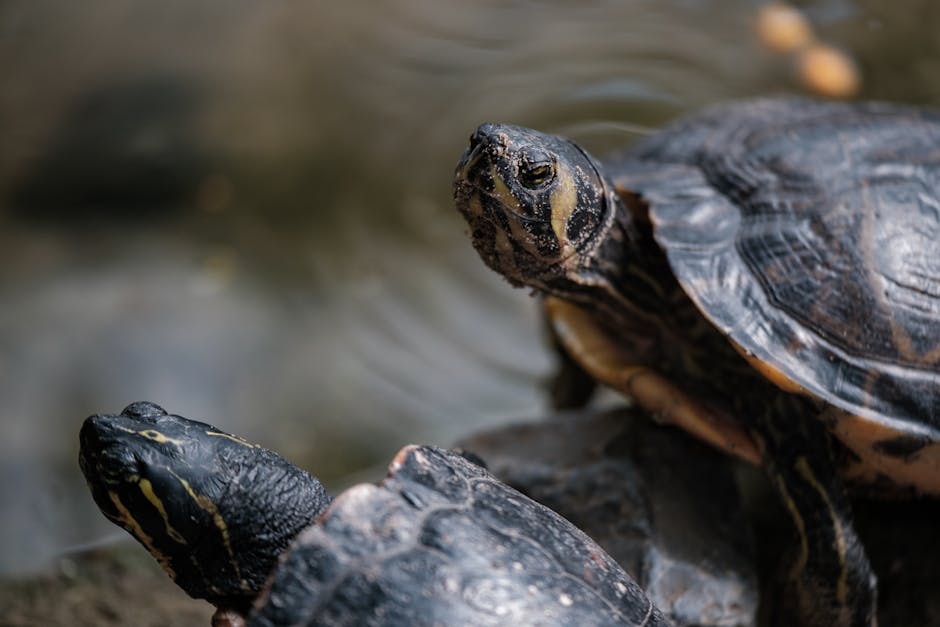
I have dived with sea turtles in a dozen countries. I have watched them feed on coral and seagrass, sleep wedged under ledges, glide through schools of fish that parted for them the way crowds part for someone large and unhurried. I have watched one haul itself onto a beach in moonlight and dig a nest with its flippers, weeping the strange clear tears that help flush salt from its eyes, and I have watched tiny hatchlings — each one no larger than a playing card — erupt from the sand and scramble toward the sea with the entirety of their future written into their behaviour.
Every time, I feel the same thing: the weight of duration. These animals have been navigating our oceans for over 110 million years. The dinosaurs that walked the Earth during the Cretaceous shared their seas with ancestors of the turtles I’m watching now.
That continuity should demand more from us than it currently gets.
Seven Species, Seven Stories
There are seven recognised species of sea turtle, and they are meaningfully different from each other — in size, diet, range, and conservation status.
The green turtle (Chelonia mydas) is the most widely distributed and, in adulthood, the only herbivorous species. It grazes seagrass beds and algae, and its fat — once rendered for oil — is actually green, which is where the name comes from, not the shell colour. Green turtles are found throughout tropical and subtropical oceans and nest on beaches across Australia, the Pacific, Caribbean, and Indian Ocean.
The loggerhead turtle (Caretta caretta) has the largest head relative to body size of any sea turtle species, equipped with powerful jaws for crushing the hard-shelled prey — crabs, whelks, horseshoe crabs, sea urchins — that make up much of its diet. It’s the most common species in Australian waters and the primary species that nests on the beaches of Mon Repos, near Bundaberg in Queensland, which hosts one of the largest loggerhead nesting aggregations in the South Pacific.
The leatherback turtle (Dermochelys coriacea) is the largest reptile on Earth after some crocodilians, reaching up to 2.1 metres in length and 900 kilograms in weight. Unlike all other sea turtle species, it has no hard shell — instead, its back is covered by a mosaic of small osteoderms embedded in leathery skin. It feeds almost exclusively on jellyfish and makes extraordinary long-distance migrations, including some of the longest of any reptile, from nesting beaches in the Pacific to feeding grounds off the coast of North America. It is critically endangered.
The hawksbill turtle (Eretmochelys imbricata) is the most reef-associated species and, to my eye, the most beautiful. Its shell — the “tortoiseshell” of old — was heavily exploited for centuries, and it remains critically endangered globally. Hawksbills feed primarily on sponges, and their narrow beaks allow them to access crevices and overhangs on the reef that are inaccessible to larger species. Their feeding behaviour physically shapes reef structure: they remove sponges that would otherwise overgrow coral.
The flatback turtle (Natator depressus) is found exclusively in Australian waters and is perhaps the least studied of the seven species. It has a distinctive flat, olive-grey shell with upturned edges, and it nests only on Australian beaches. Because it nests and feeds within Australian waters almost exclusively, its fate is particularly closely tied to the management of Australia’s marine environment.
The Kemp’s ridley (Lepidochelys kempii) is the smallest sea turtle and the rarest, found primarily in the Gulf of Mexico and Atlantic coast of the US. It participates in mass synchronised nesting events called arribadas — one of the stranger spectacles in the natural world.
The olive ridley (Lepidochelys olivacea) is the most abundant sea turtle globally and also participates in arribadas, most famously at Ostional in Costa Rica and Gahirmatha in India.
Navigation: The Impossible Journey
Perhaps the most remarkable thing about sea turtles — and there is competition for this category — is their navigational ability.
Sea turtles imprint on the magnetic signature of the beach where they were born. Females carry that imprint for their entire lives — which may extend to 80 or 100 years — and return to the same beach, sometimes the same stretch of beach, to lay their own eggs. The precision is extraordinary: female green turtles tracked at Ascension Island in the South Atlantic were found to nest within 40 kilometres of their birth site after migrations of 2,000 kilometres or more.
The mechanism involves magnetoreception — the ability to detect variations in the Earth’s magnetic field and use them as navigational coordinates. Turtles appear to encode latitude (field intensity) and longitude (field inclination angle) from the magnetic field and use these as a kind of biological GPS. The sensory organs involved are not yet fully understood; some evidence points to magnetite crystals in the brain, but the research is ongoing.
What we do know is that this system is robust enough to guide an animal across thousands of kilometres of open ocean to a specific beach it last visited decades ago. For any navigator — mechanical or biological — that is an astonishing performance.
Nesting: What Happens in the Dark
Sea turtle nesting beaches are protected sites, and access is carefully managed at most well-run operations. The disturbance threshold for nesting females is low: bright lights cause them to abort nesting attempts and return to the sea; noise and close human proximity during the early stages of nest site selection causes the same. The guidelines for responsible nest watching are non-negotiable: red-filtered lights only, no flash photography, no blocking the turtle’s path to the sea, strict distance rules until the animal is committed to nesting.
A female that has committed to nesting will remain on the beach for 45 minutes to two hours, during which time she is in a deeply focused state — largely unresponsive to external stimuli. During this window, responsible operators allow observers to watch, and sometimes to see hatchlings, under careful supervision.
What you see, if you’re lucky: the female using her rear flippers to excavate a narrow nest chamber with remarkable precision, depositing 80 to 150 ping-pong-ball-sized eggs, covering the chamber, and disguising the site with sweeping flipper movements before returning to the sea. She will not see these eggs again.
What you see at a hatch: dozens of tiny turtles emerging from the sand at night, following the natural light gradient toward the sea with absolute instinctive commitment. They are not slow. They run.
The Numbers and What They Mean
Loggerhead turtles take approximately 30 years to reach sexual maturity. Green turtles may take 25 to 50 years. This means that a turtle killed today as a juvenile represents not just the loss of that individual but the loss of decades of future reproductive potential.
It also means that conservation work done in the 1980s and 1990s — the exclusion of turtle excluder devices from trawl nets, the protection of nesting beaches, the banning of tortoiseshell trade under CITES — is only now beginning to show results in adult population numbers. Recovery is slow precisely because the animals are slow. You are managing across timescales that exceed human attention spans, and that requires institutional commitment that politics often struggles to sustain.
The threats are well-documented: bycatch in commercial fisheries, entanglement in ghost gear (lost or abandoned fishing nets), plastic ingestion (particularly for leatherbacks, which mistake plastic bags for jellyfish), coastal development on nesting beaches, light pollution disorienting hatchlings and deterring nesting females, and climate change, which affects both beach temperatures (which determine hatchling sex ratios) and sea level.
None of these problems is insoluble. Some of them are being actively solved. But they require the sustained attention of people who value what they’re looking at.
Where to See Turtles in Australia
The Great Barrier Reef and Coral Sea support large populations of green and hawksbill turtles, and encounters are common on most reef dives. Raine Island, on the northern Great Barrier Reef, hosts the world’s largest green turtle nesting aggregation.
Mon Repos Conservation Park near Bundaberg is the premier loggerhead nesting site in the South Pacific; the visitor centre runs carefully managed nesting and hatching tours between November and March.
Ningaloo Reef in Western Australia has resident green turtle populations and regular hawksbill sightings. Lady Elliot Island at the GBR’s southern tip is a consistent and reliable location for turtle encounters on every dive.
Spend time with them. Know their names — all seven of them. They have been here long enough to deserve the attention.