There’s a site on Ribbon Reef No. 10, about 270 kilometres north of Cairns, called Cod Hole. It’s been on the GBR dive circuit since the 1970s, when Ron and Valerie Taylor first filmed there, and it has one feature that no other site on the reef quite replicates: potato cod that will swim directly up to you, hover at arm’s length, and stare.
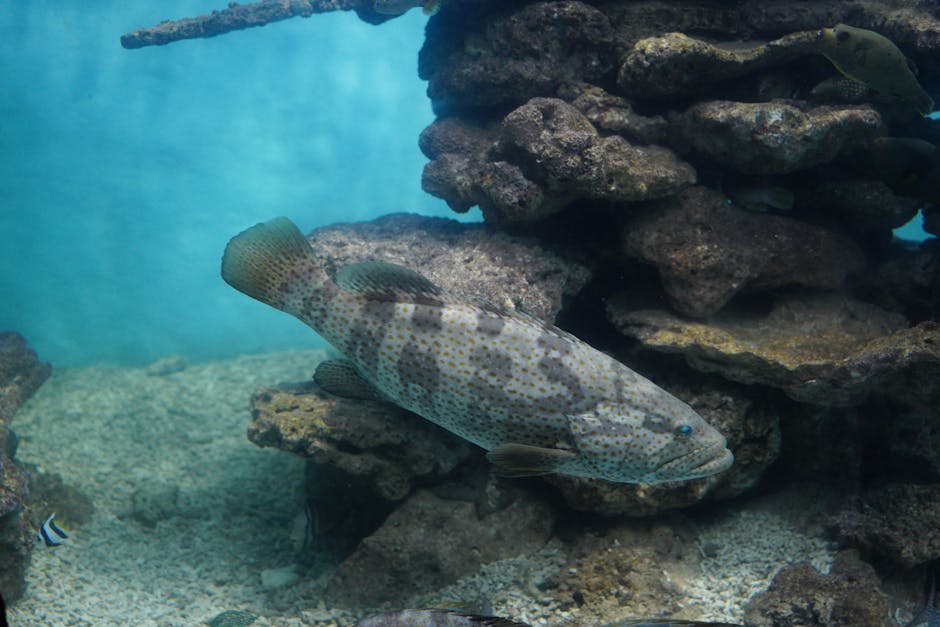
Potato cod (Epinephelus tukula) are the largest of the grouper family found on the GBR, reaching up to two metres in length and 110 kilograms. They’re covered in dark brown spots on a pale background – the pattern that gives them their name – and they have the grouper’s characteristic expression: a large mouth, heavy jaw, and eyes that seem to be evaluating you with mild contempt. At Cod Hole, they’ve been fed by divers for so long that they associate human presence with food, and they make their interest known immediately.
The Cod Hole Phenomenon
The Cod Hole fish are habituated – they’ve learned, over decades, that divers mean food. This is not a natural behaviour; it’s a conditioned response, and it raises genuine questions about whether feeding wildlife in this way is appropriate. The debate has been running in the GBR dive community for years.
The case against feeding is straightforward: it alters natural behaviour, creates dependency, and can cause nutritional problems if the food provided doesn’t match the animal’s natural diet. Potato cod are ambush predators, feeding on fish, crustaceans, and cephalopods – a diet that hand-feeding from divers doesn’t replicate.
The case for the Cod Hole interactions is more nuanced. The fish are not dependent on diver feeding – they’re large, healthy animals that clearly feed naturally as well. The interactions have generated decades of research data on individual fish behaviour and site fidelity. And they’ve created a constituency of divers who’ve looked a two-metre fish in the eye and come away with a different understanding of what fish are.
Because potato cod, up close, are clearly not simple stimulus-response machines. They have individual personalities – some are bold and approach immediately, others are more cautious. They remember individual divers across multiple visits. They show what looks very much like anticipation when a familiar boat arrives. Whether this constitutes intelligence in any philosophically meaningful sense is debated, but it’s not nothing.
Grouper Biology and the Reef
Potato cod are apex predators in the reef ecosystem, and their presence – or absence – has measurable effects on the communities below them. Like all large groupers, they’re protogynous hermaphrodites: they begin life as females and transition to males as they grow larger and older. This means that the largest, oldest fish in a population are always male, and removing large fish through fishing disproportionately removes males, skewing sex ratios and reducing reproductive success.
Potato cod are listed as vulnerable on the IUCN Red List, primarily due to overfishing. They’re slow-growing, late-maturing (they don’t reach sexual maturity until around 5 years old), and long-lived (up to 30 years). These life history traits make them highly vulnerable to fishing pressure – populations can be depleted quickly and recover slowly.
The Cod Hole population is protected within the Great Barrier Reef Marine Park, and the fish there are among the largest and oldest in the GBR system. Some of the individuals currently greeting divers may have been doing so for 20 years or more. There’s a continuity to that – a fish that has been part of the same dive site for longer than many of the divers visiting it have been alive.
Beyond Cod Hole
Potato cod are found throughout the northern and central GBR, typically on outer reef slopes and walls at depths of 10-40 metres. Outside of Cod Hole, they’re less approachable but still present – large, solitary animals that hold territories around prominent coral structures and watch passing divers with the same evaluating expression.
Seeing one in the wild, without the conditioning of Cod Hole, is a different experience. The fish is on its own terms, in its own territory, and the encounter is briefer and less intimate. But there’s something to be said for that too – the fish as it actually is, rather than as it’s been shaped by 50 years of diver interaction. Both versions are worth knowing.