The first time you see a manta ray at a cleaning station, you understand why the moment matters. Not because of what a brochure might tell you, but because of what actually happens in the water. The ray arrives with a purpose – not to perform for cameras, but to be cleaned. Its wing-like fins move with an almost meditative rhythm as it hovers over the reef, and smaller fish dart in to feed on parasites and dead skin. You’re watching something functional, not theatrical. It’s a transaction that has played out for years, long before divers started showing up to observe it.
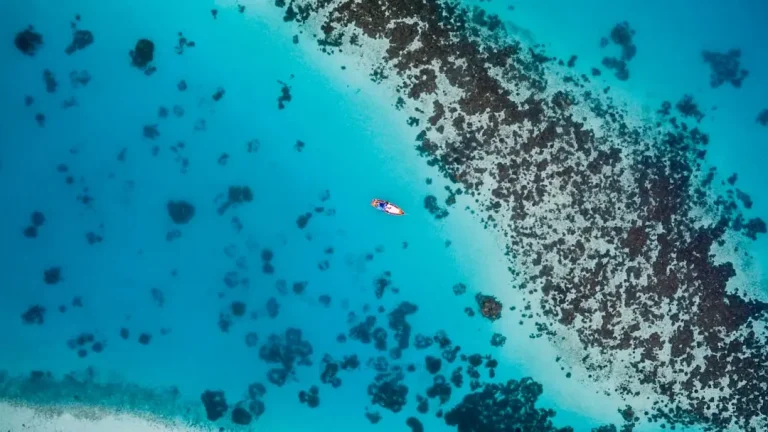
The Great Barrier Reef’s cleaning stations exist in specific locations where manta rays have learned to return regularly. These aren’t random encounters. The rays know where to go, and they go there because the service is reliable. Off the coast of northern Queensland, particularly around the Coral Sea and the outer reef systems, certain sites have become known as gathering points. The rays don’t arrive on a schedule you can predict with certainty, but they do arrive. Timing, water conditions, and season all play a role in whether you’ll witness this behavior during a given dive or snorkel trip.
How Cleaning Stations Actually Work
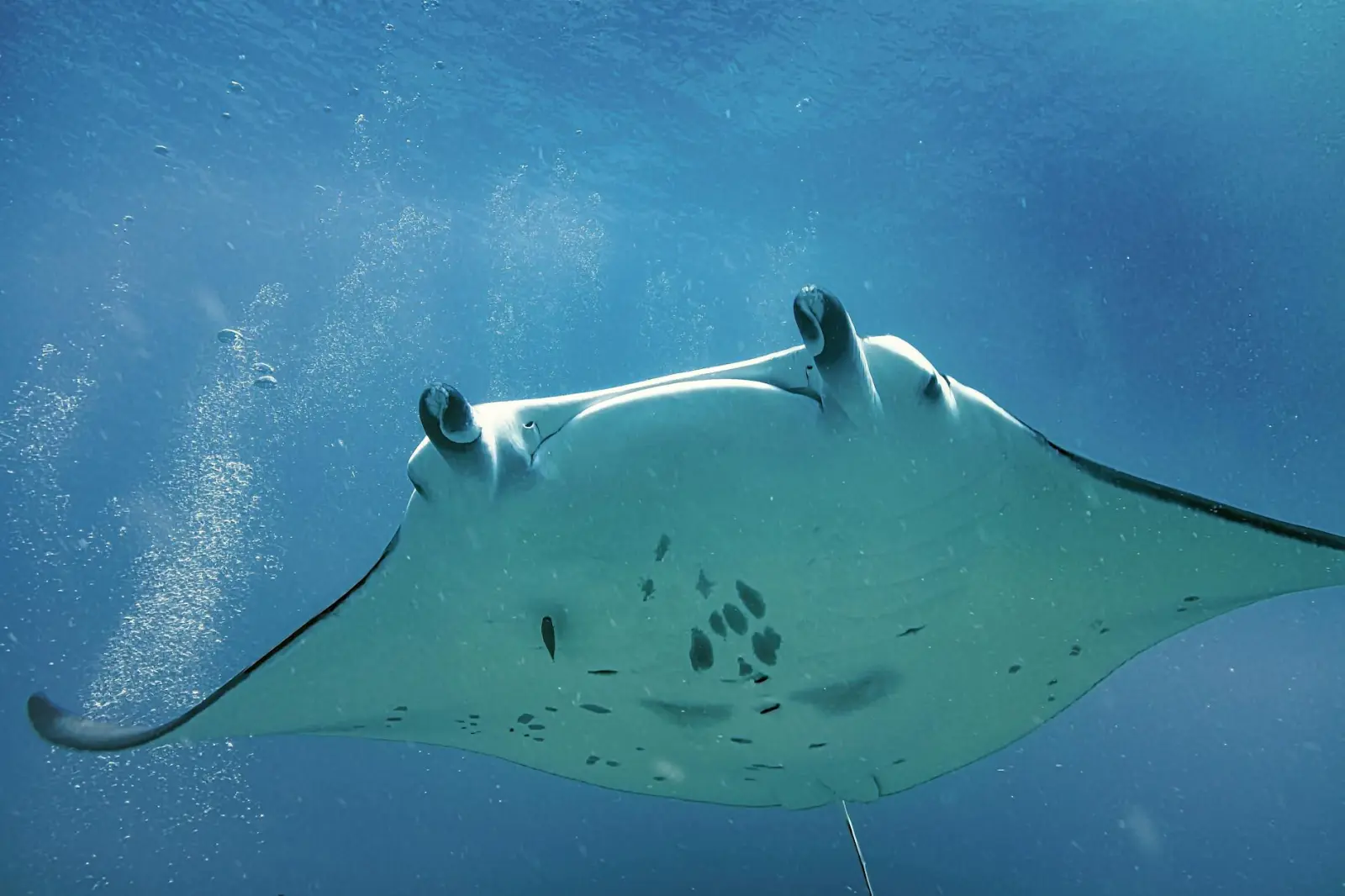
A cleaning station is a specific area of reef where fish congregate to feed on parasites and algae that accumulate on larger marine animals. For manta rays, these stations offer practical relief. The rays position themselves horizontally, sometimes hovering just above the reef, sometimes tilting slightly to expose different parts of their bodies. The smaller fish – wrasses, butterflyfish, and other reef species – move across the ray’s skin in coordinated patterns. It’s not aggressive or frantic. It’s methodical.
What strikes most divers is how still the rays become. These are animals that can weigh up to 1,300 kilograms and span over seven meters wing-tip to wing-tip, yet they hold nearly motionless while tiny fish work across their bodies. The trust implicit in this behavior is difficult to overstate. The ray is vulnerable in this position, and it remains vulnerable because the benefit outweighs the risk. A diver watching this unfold is witnessing something genuinely intimate, even if the ray is indifferent to your presence.
The cleaning relationship isn’t one-sided. The fish benefit from a reliable food source, and the rays benefit from parasite removal and skin maintenance. It’s a relationship that has evolved over time, and both parties understand their role. Divers who approach these stations with patience often see the behavior repeat multiple times during a single dive, with different rays arriving and departing in succession.
The Reality of Observing Manta Rays Underwater
Visibility at the Barrier Reef varies considerably depending on season and location. During the dry season (roughly May to October), water clarity tends to be better, and you’ll see the rays with sharper detail. The wet season brings warmer water but also reduced visibility from runoff and plankton blooms. If you’re specifically hoping to observe manta rays at cleaning stations, timing your visit around drier months increases your odds, though it doesn’t guarantee anything.
The actual experience of being near a manta ray is quieter than most people expect. There’s no dramatic moment, no sudden appearance. A ray glides into the station area with deliberate, unhurried movements. If you’re positioned well, you watch it approach. If you’re not, you might miss the arrival and only notice when it’s already settled into position. The key to witnessing this behavior is staying at the site long enough and maintaining awareness of the entire reef area, not just what’s directly in front of you.
Most dive operators who work with manta ray sites have learned where the rays typically appear and position divers accordingly. You’ll often find a group of divers already waiting at a known cleaning station, sometimes for extended periods with nothing to show for it. Other times, multiple rays arrive within minutes. The unpredictability is part of the experience. It’s not a show you can guarantee; it’s a behavior you can only hope to witness.
Fatigue and Practical Constraints
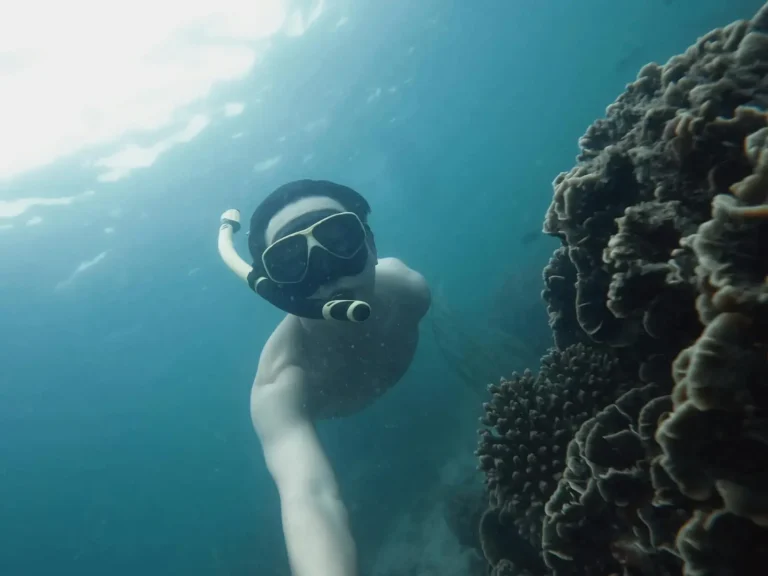
Diving or snorkeling at a cleaning station requires patience and physical endurance. If you’re diving, you’re managing air consumption while maintaining position in current. If you’re snorkeling, you’re managing breath and staying afloat while watching a specific area of reef. Either way, extended observation means sustained effort. The water temperature at the Barrier Reef is warm enough that you won’t be cold, but you will tire from maintaining position and focus.
Current at the reef can be significant, particularly at outer reef sites. A cleaning station might be positioned in a location where current runs consistently, which means you’re constantly adjusting your position to stay in place. Divers with less experience sometimes struggle with this. It’s not dangerous if you’re properly weighted and comfortable in the water, but it’s tiring. Plan for longer bottom times if you want a genuine chance at seeing manta ray behavior rather than just passing through the area.
What Happens When You’re There
Assuming conditions align and a ray does arrive, what you actually observe is surprisingly subtle. The ray’s fins move in a gentle, undulating motion. Its mouth remains open slightly as it hovers. The smaller fish work methodically across its body. If you’re close enough, you can see the texture of the ray’s skin, the pattern of spots or stripes that vary from individual to individual. Some rays are darker, almost black. Others are lighter, with distinctive markings.
The ray’s eye is visible if you’re positioned correctly. It’s a dark, intelligent-looking feature, and the ray is aware of your presence even if it doesn’t react to it. The indifference is notable. The ray isn’t performing. It isn’t curious about you in any obvious way. It’s simply tolerating your presence while attending to its own needs. This is the reality of wildlife observation – you’re a minor element in the animal’s world, not the center of it.
Behavior varies from ray to ray. Some remain at a cleaning station for several minutes, then depart with a few powerful strokes of their fins. Others stay longer, rotating their bodies slightly to expose different areas to the cleaning fish. If multiple rays arrive during your dive, you might see different approaches to the same activity. One ray might be methodical and patient; another might be more restless, arriving and leaving quickly.
Seasonal and Environmental Factors
Manta rays at the Great Barrier Reef are more abundant during certain times of year. Plankton blooms in spring and early summer can concentrate food sources, which draws rays to specific areas. Water temperature fluctuations also influence their movements. A diver who visits in March experiences a different reef ecosystem than one who visits in July, and the likelihood of manta ray encounters shifts accordingly.
The broader health of the reef affects manta ray presence as well. Coral bleaching events, water quality changes, and shifts in fish populations all influence whether rays find a particular cleaning station worth visiting. The Barrier Reef has faced significant stressors in recent years, and these changes ripple through the ecosystem in ways that aren’t always immediately visible to a visiting diver but do affect animal behavior and distribution.
Weather and sea conditions matter practically. Rough seas can prevent boats from reaching outer reef sites. Strong currents can make diving uncomfortable or unsafe. Visibility can drop suddenly due to weather changes. These are the constraints that shape whether a planned manta ray observation actually happens or becomes a different kind of dive entirely.
Visiting a manta ray cleaning station at the Great Barrier Reef is possible, but it’s not guaranteed. The experience depends on timing, conditions, and a degree of luck. What you gain from it, when it does happen, is a genuine glimpse into how these animals navigate their environment – not as performers in a nature documentary, but as creatures attending to their own survival and maintenance in a reef system that has supported them for generations. The moment is quiet, brief often, and entirely worth the effort of being there.