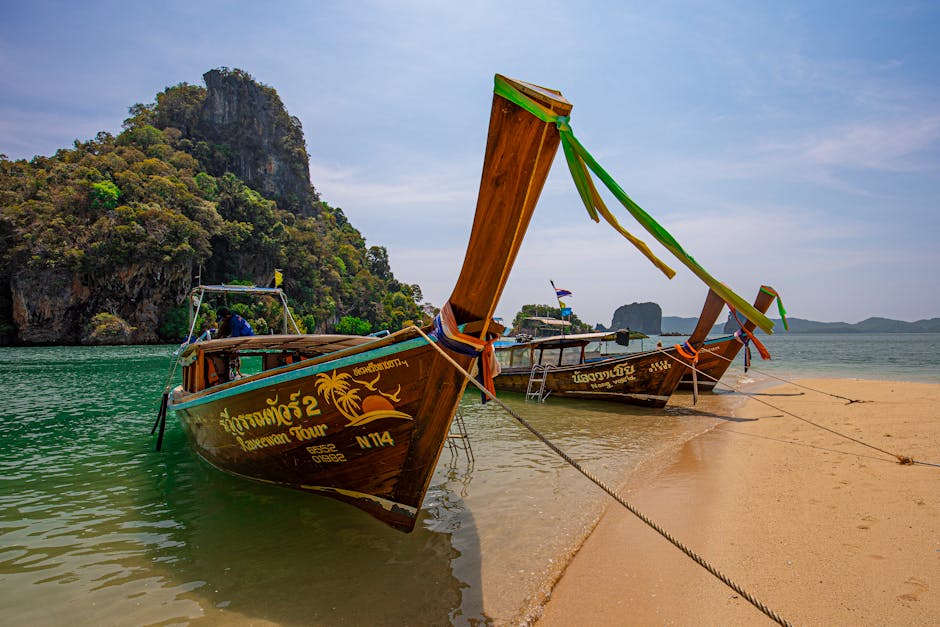
The longtail boats leave from Ao Nang beach in Krabi in the early morning, when the water is still relatively calm and the air hasn’t yet turned thick with heat. If you’ve booked a four islands tour, you’ll find yourself standing on the sand around 8 or 9 AM, waiting with a group of other travelers while a boatman checks names against a clipboard. The boat itself is unmistakable – a long wooden hull with an exposed diesel engine mounted on a swivel at the stern, a propeller on a shaft that can be steered like a rudder. It’s a design that’s been used in these waters for decades, and it works because it’s shallow-draft enough to navigate the limestone-studded shallows around the islands.
What strikes you immediately is how exposed you are. There’s a canvas canopy overhead, but it offers minimal shade once the sun climbs higher. The engine is loud – not earsplitting, but loud enough that conversation becomes difficult once you’re moving. The boat rocks with a rhythm that feels gentle at first but can become tiring if you’re prone to motion sickness. Most people don’t get sick on these routes because the water is relatively protected, but the constant gentle motion is something your body registers for hours.
The Islands and What They Actually Offer
The four islands typically included in these tours are Phra Nang Cave Beach, Railay Beach, Bamboo Island, and Poda Island. The names sound romantic in marketing materials, but the reality is more nuanced. Phra Nang Cave Beach is genuinely interesting – there’s a cave with a small shrine inside, and the limestone cliffs create a dramatic setting. The water here is usually clear enough to see the sandy bottom in shallow areas. You’ll have maybe 45 minutes to an hour on this beach, which is enough time to swim, walk to the cave, and take photos without feeling rushed.
Railay Beach is where things get crowded. It’s accessible only by boat, which sounds exclusive until you realize that means every tour operator in the region brings people here. On a typical day during peak season, you’ll find hundreds of tourists on a relatively narrow stretch of sand. The beach itself is pleasant – soft sand, decent water clarity – but the atmosphere is decidedly commercial. There are beach clubs, massage vendors, and a general sense of controlled tourism. If you arrive early in the tour sequence, the crowd is manageable. If you arrive later in the day, it feels congested.
Bamboo Island lives up to its name in terms of natural appeal. The water is noticeably clearer here, and the island has a quieter feel because fewer boats make the journey out to it. The downside is that it’s farther from the mainland, which means more time on the boat and less time on the island itself. You might get 30 to 40 minutes here, depending on how the tour operator structures the day. The snorkeling around Bamboo Island is decent but not exceptional. You’ll see small reef fish and some coral, but don’t expect to encounter anything you haven’t seen in similar Southeast Asian waters.
Poda Island is essentially a limestone rock formation with a small beach area at its base. It’s photogenic from a distance – the kind of place that looks impressive in photos – but the actual time spent there is brief. Many tours use it as a photo stop rather than a swimming destination. The real value of Poda Island is the view it offers of the surrounding seascape and the other limestone formations scattered across the water.
The Practical Reality of a Full Day
A typical four islands tour runs from around 8 AM to 4 or 5 PM. That’s eight hours of your day, but only about two to three of those hours are actually spent swimming or on a beach. The rest is boat time – traveling between islands, waiting for other groups, and dealing with the logistics of moving 30 or 40 people on and off a boat repeatedly. The boat stops are staggered, which means you’re often waiting while another group finishes their time on the beach before your group gets in the water.
The lunch situation varies by operator. Some tours include a lunch stop on one of the islands, usually a simple meal of rice, fish, and vegetables served on the beach. Others give you a lunch voucher for a beachside restaurant. The quality is functional rather than memorable. Bring snacks and extra water. The sun exposure is real, and dehydration creeps up on you faster than you’d expect when you’re alternating between boat time and water time.
Seasickness medication is worth considering if you have any sensitivity to motion. The ride isn’t rough, but the constant gentle rocking combined with engine fumes and sun exposure can trigger nausea in people who don’t normally get motion sickness. Ginger supplements or over-the-counter medication taken before departure is a practical precaution.
Timing and Seasonal Patterns
The best time to do this tour is during the dry season, roughly November through April. The water is calmer, visibility is better, and the weather is predictable. During the monsoon season – May through October – the boats still operate, but the water can be choppy, visibility drops, and rain is common. Tours get cancelled occasionally during this period if conditions deteriorate, which is why booking flexibility matters.
The time of day you depart affects the experience more than you might think. Early departures mean you reach the islands before the main crowds arrive. By 10 AM, Railay Beach starts filling up with people from other tours. If you’re on an early boat, you’ll have a window of relative calm. Later departures mean you’re arriving at islands that are already busy, and you’re racing against the clock to finish before sunset limits visibility for the return journey.
The water temperature is warm year-round – around 28 to 30 degrees Celsius – so you don’t need a wetsuit. Reef shoes are practical because the sandy bottom can have sharp shells and coral fragments. Sunscreen is essential, and reef-safe sunscreen is the responsible choice given the coral ecosystems in the area.
The Experience Beyond the Itinerary
What makes a four islands tour memorable isn’t usually the islands themselves – they’re pleasant but not extraordinary. What stays with you is the atmosphere of being on the water for most of the day, the sound and motion of the longtail boat, the way the limestone cliffs look different from the water than they do from land, and the rhythm of moving between different groups and locations. There’s a meditative quality to it if you’re not expecting a high-energy adventure.
The other travelers on your boat become part of the experience. You’ll spend eight hours with the same 30 or 40 people, which creates a strange temporary community. Some people bond and exchange contact information. Others barely acknowledge each other. The boatman and guides are usually friendly but professional – they’ve done this hundreds of times, and they move through the day with practiced efficiency.
Photography is easy because the scenery is inherently photogenic. The limestone formations, the water clarity, and the beach settings all photograph well. If you’re the type of traveler who enjoys documenting your trip, you’ll have plenty of material. If you’re trying to avoid the tourist photo experience, you’ll notice that everyone else is doing the same thing, which can feel slightly absurd when you’re all standing in the same spot taking the same photo.
The value of a four islands tour depends on what you’re looking for. If you want to see multiple locations in one day without renting your own boat, it’s efficient. If you want deep snorkeling or a quiet beach experience, you’ll be disappointed. If you want to spend a day on the water and get a sense of Krabi’s coastal geography, it works well. Most people who take these tours feel like they’ve had a reasonable day out, even if it wasn’t transformative. It’s the kind of experience that’s fine to do once, and you’ll understand afterward whether you’d want to do it again.