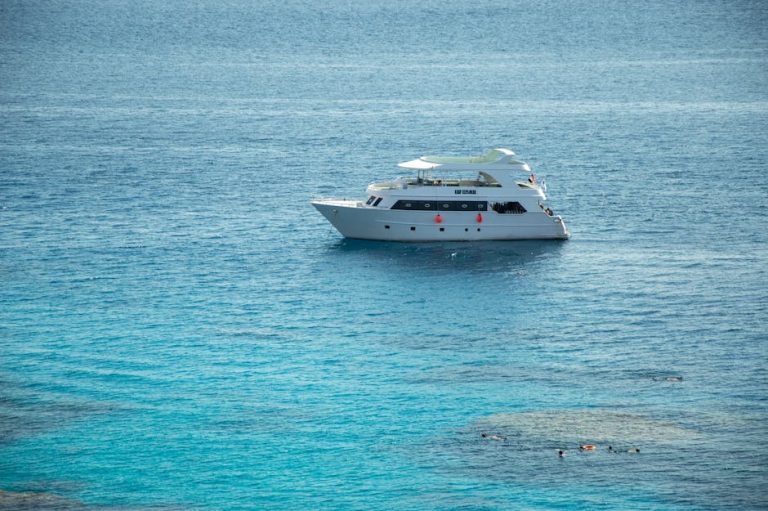
The crossing to Osprey Reef takes about twelve hours from Cairns, running northeast through the night over open ocean. I’ve made it six times. Each time, I’ve woken at first light to the same thing: a ring of breaking white water on the horizon that resolves, as the vessel approaches, into the outer reef edge of an atoll rising from nearly 2,000 metres of water.
There’s nothing around it. No other reef visible. No land in any direction. Just this oval of shallow water in the middle of deep ocean, surrounded by walls that drop immediately to abyssal depth, covered in marine life that has never seen a fishing boat and has no particular reason to avoid you.
If you want to understand what a healthy, intact coral reef ecosystem looks like, the Coral Sea is the classroom.
The Coral Sea: Geography and Context
The Coral Sea occupies the body of water between the Great Barrier Reef to the west, the Solomon Islands and Vanuatu to the north and northeast, New Caledonia to the east, and open Pacific Ocean to the south. It’s a deep ocean basin — average depth around 2,400 metres — punctuated by a series of submerged seamounts and atolls that rise to the surface and support reef ecosystems of extraordinary quality.
The major diving destinations within reach of Cairns-based liveaboards are: Osprey Reef, the most visited and most famous; Bougainville Reef, approximately 250 kilometres northeast of Cairns; and Holmes Reef, further east again. The Coral Sea atolls Cato Island and Mellish Reef exist further into the sea, accessible only on extended itineraries. All lie within the Coral Sea Marine Park — one of the world’s largest marine protected areas — and have been subject to very limited fishing and almost no terrestrial influence.
Osprey Reef: Dive by Dive
Most Coral Sea liveaboards spend two full diving days at Osprey before moving to another atoll or returning to Cairns. Two days on a reef you’ve never seen before sounds generous. At Osprey, it’s barely enough.
The North Horn is the site that defines Osprey for most divers. The Horn is a promontory at the atoll’s northern tip where the reef wall meets open ocean and the current creates an upwelling that concentrates plankton, baitfish, and everything that eats baitfish. The grey reef shark population at the North Horn is a reef institution — thirty to fifty individuals are visible on a normal dive, with silvertip sharks patrolling the wall below and occasional hammerheads in the blue water off the reef edge. Many operators run a supervised shark interaction here, and the experience of being surrounded by large, unhurried sharks in open water while hovering at twenty metres is unlike anything I’ve found in Australian day-trip diving.
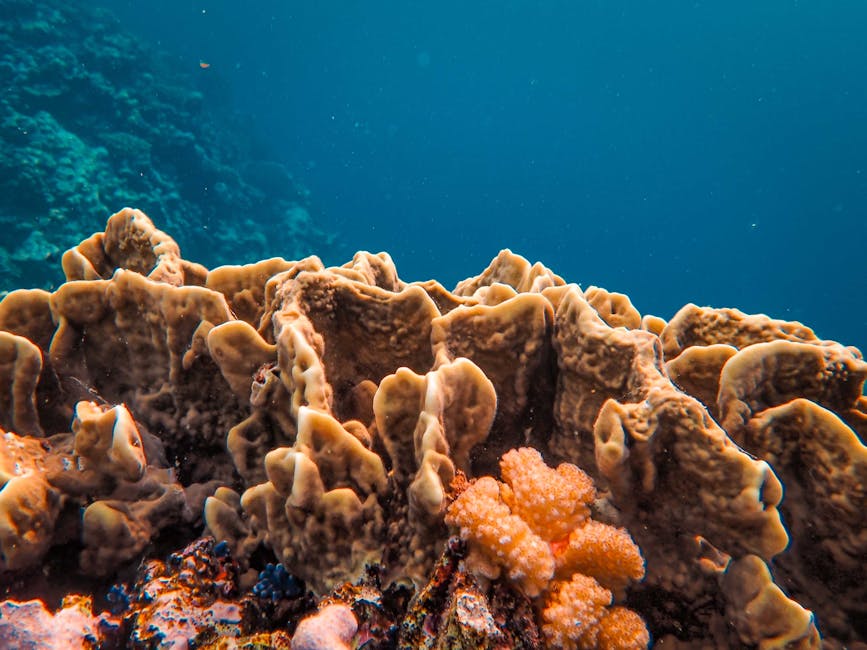
The East Wall is, if anything, my preferred Osprey dive. A continuous vertical reef face runs for kilometres along the atoll’s windward side, starting at the surface and dropping beyond recreational depth. In good visibility — thirty metres or more, which is normal here — you can see the wall curving away below you and the open ocean stretching to the east. The soft coral coverage on the upper wall sections is extraordinary: Dendronephthya in orange, red, and white packed so densely that sections of wall are invisible beneath the invertebrate growth. Giant grouper, Maori wrasse, schools of surgeonfish in numbers impossible to count.
The Lagoon is the inside of the atoll — shallow, clear, with a coral garden floor at 10 to 15 metres and the calm protected from the ocean swell. The lagoon is where macro life concentrates: nudibranchs on the coral patches, turtles grazing on algae, the occasional leopard shark resting on the sand. After two dives on the outer wall, an afternoon in the lagoon has a restorative quality — gentle, unhurried, the reef at a different scale.
Night diving at Osprey is exceptional. The absence of other vessels and any artificial light means genuine darkness at the surface, and the species that emerge on the outer reef at night — Spanish dancers, large octopuses, cone shells moving across the sand — are present in the density you’d expect from a reef with minimal human disturbance.
Bougainville Reef
Bougainville is smaller than Osprey and receives fewer visitors, which produces a reef that feels, if anything, even more intact. The coral garden in the lagoon is one of the finest I’ve seen in Australian waters: Acropora table corals of remarkable size and completeness, massive Porites colonies that indicate decades of undisturbed growth, the kind of coverage that GBR divers who know only the inner and mid-shelf reef find genuinely surprising.
The diving on Bougainville’s outer walls produces the same pelagic encounter quality as Osprey — sharks, large trevally, occasional hammerheads — but with a different character. The channels between Bougainville’s main reef and its satellite structures produce strong tidal flows that concentrate feeding activity; drift diving through these channels in the right conditions is among the finest drift experience I’ve had in Australia.
The barracuda at Bougainville are worth specific mention. Schools of chevron barracuda — several hundred individuals — are resident at the main reef, hovering in spiralling formations in the current near the wall edge. Hovering at their level while they turn in formation around you, the individual fish resolving and disappearing in the school’s coordinated movement, is a distinctly different experience from seeing a single large barracuda on a reef.
Holmes Reef
Holmes is furthest from Cairns of the three main Coral Sea destinations — approximately 280 kilometres offshore — and consequently the least frequently visited. The extra travel time produces a reef in the condition that comes from very few dive boats and effectively no fishing.
The lagoon coral garden at Holmes is the site I consistently recommend to divers asking where the best coral coverage in Australian waters is. It’s a shallow (three to twelve metres), expansive coral community of such variety and density that it looks from above like a tropical garden in the botanical sense — deliberately varied, improbably perfect. Acropora tables, branching staghorn thickets, massive Porites domes, enormous brain corals, and soft coral in the deeper sections, all in good health and organised into the complex layered architecture that takes decades of undisturbed growth to produce.
Planning a Coral Sea Trip
Duration: Most Coral Sea itineraries run four to seven days. A four-day trip typically covers Osprey only. A seven-day trip can cover Osprey, Bougainville, and Holmes with two diving days at each. For a first Coral Sea trip, five to six days gives you meaningful time at two atolls without the extended offshore commitment of a longer itinerary.
Season: June through October produces the most reliable conditions — southeast trade winds give manageable crossings, water clarity is at its annual best, and temperatures in the 25–27°C range are comfortable in a 3mm wetsuit. November through March brings warmer water and the risk of cyclonic weather. Most operators pause or reduce Coral Sea operations during the heart of the wet season.
Vessel selection: Coral Sea operators range from basic but functional vessels with dormitory-style accommodation (budget end, focused entirely on the diving) to purpose-built luxury dive yachts with en suite cabins (premium end, excellent food and comfort alongside excellent diving). The diving quality is largely identical across price points — the ocean doesn’t grade itself. What differs is sleep quality, food, group size, and the character of the surface intervals.
Ask about group size before booking. A vessel taking twelve divers has a fundamentally different character from one taking thirty-six, and on a remote reef with no other boats present, the size of your group determines how crowded each dive site feels.
Go. The Coral Sea is waiting, and it’s in no hurry.