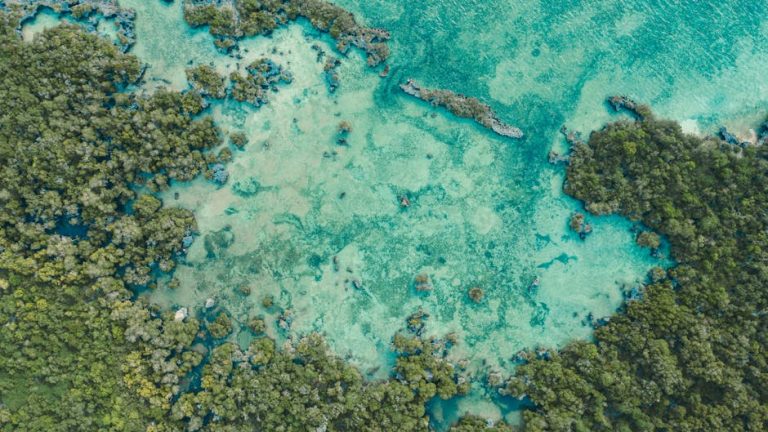
Ningaloo Reef sits along the western coast of Australia, stretching roughly 260 kilometers along the Exmouth Peninsula. The reef system is unusual in that it runs close to shore – sometimes just a few hundred meters out – which makes whale shark encounters here more accessible than in most other parts of the world. The sharks arrive seasonally, typically between March and August, though the peak window is April through June when water conditions are most favorable and sightings most reliable.
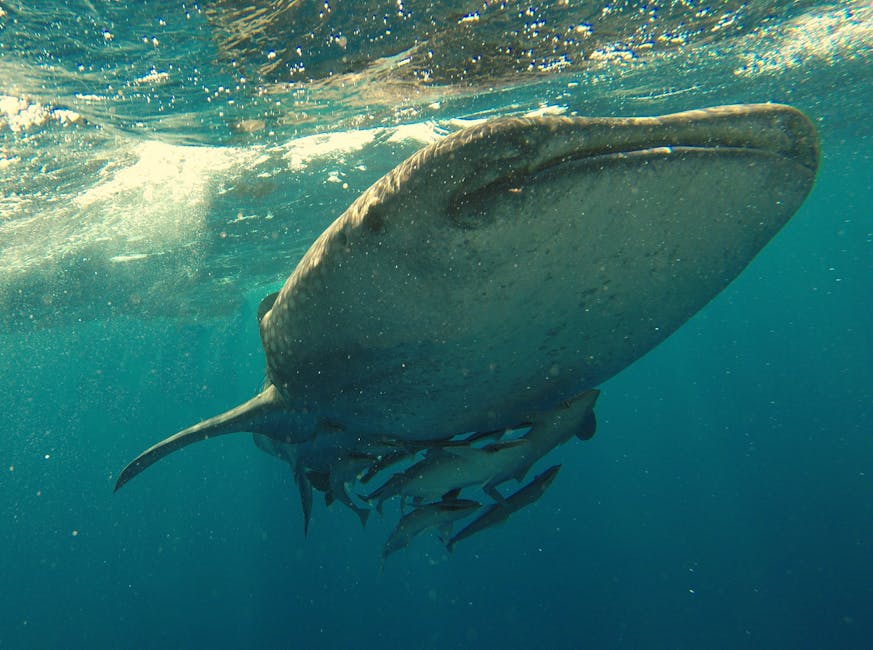
The first time you see a whale shark in the water, the scale hits differently than any photograph suggests. These animals can reach 18 meters or longer, and when one glides beneath the surface near your boat, the sheer mass of it creates a presence that feels almost geological. Your brain struggles to process something that large moving through water with such apparent ease. Most people expect fear or adrenaline, but what actually happens is closer to stillness – a moment where the animal’s indifference to your presence becomes clear, and you realize you’re witnessing something that operates on an entirely different scale than human concerns.
The Morning Rhythm and Boat Operations
Tours depart early. Most operators leave the dock between 6:30 and 7:00 AM, which means you need to be ready and waiting well before sunrise. The water at that hour is glassy and cool, and the light hasn’t yet burned off the haze that sits over the reef. Boats head out in loose formations, spaced apart enough that they’re not competing directly for sightings but close enough that radio communication keeps everyone coordinated.
The actual search involves a lot of patience. Spotters – experienced crew members who’ve spent thousands of hours on the water – scan the horizon and the water column for the telltale dark shape of a shark. On good days, they find them relatively quickly. On slower days, you might spend two or three hours cruising before anything materializes. The boat moves at a steady pace, not rushing, just covering ground methodically. Conversations on deck tend to be quiet. People are watching, waiting, hoping.
When a shark is spotted, the energy shifts immediately. The boat changes course, and crew members brief you on what’s about to happen. You’ll enter the water from the side of the boat, usually in groups of four to six people. The water temperature around Ningaloo ranges from about 22 to 26 degrees Celsius depending on the season, which is cool enough that a thin wetsuit makes sense, though not essential. Visibility varies significantly – sometimes it’s crystalline and you can see 20 meters ahead, other times it’s murky and you’re working with maybe 10 meters of sight line.
What the Encounter Actually Feels Like
You enter the water and immediately scan for the shark. If conditions are clear and the animal is close, you might spot it within seconds – a massive gray-brown shape moving through the water column. The instinct is to swim toward it, but the protocol is specific: you position yourself ahead of the shark’s path and let it come to you. This is partly for safety and partly because the sharks are filter feeders, moving through plankton-rich water with their mouths open, and you don’t want to be directly in that trajectory.
The shark swims past, and depending on the angle and the light, you see different details. The texture of the skin. The pattern of spots that’s unique to each individual. The gill slits working steadily as it filters water. The eye, which is surprisingly small relative to the head, watching you with what feels like complete disinterest. The experience lasts anywhere from a few seconds to a couple of minutes, depending on the shark’s direction and speed.
What surprises most people is how gentle the encounter feels. These are massive animals, but they’re not aggressive or curious in the way predatory sharks are. They’re not investigating you. They’re not sizing you up. They’re simply moving through the water doing what they do – feeding on microscopic organisms. Your presence registers as an inconvenience at worst, something to navigate around rather than engage with. The power dynamic is obvious and humbling, but not threatening.
Seasonal Patterns and Weather Realities
Timing matters enormously. March can be hit or miss – the sharks are beginning to arrive, but sightings aren’t guaranteed. April and May offer the highest success rates, with multiple sharks often visible on the same day. By June, sightings remain good but the season is winding down. July and August see fewer animals, and by September, most have dispersed to deeper waters.
Weather also shapes the experience in ways that aren’t always obvious from a distance. The Exmouth Peninsula sits at the edge of the Indian Ocean, and conditions can change quickly. Rough seas mean the boat ride is uncomfortable and visibility underwater drops significantly. Calm mornings – which are more common in the shoulder months – make everything easier and more enjoyable. Wind direction matters too. Certain wind patterns push plankton-rich water closer to shore, which concentrates the sharks and makes encounters more likely.
The physical reality of the experience includes fatigue that builds gradually. You’re in a boat for four to six hours. You’re entering and exiting the water multiple times. You’re wearing a wetsuit and swimming in open ocean. The sun reflects intensely off the water, and even with sunscreen, you’ll feel the heat. By the time you return to shore, most people are tired in a way that’s satisfying but genuine – not the dramatic exhaustion of a strenuous activity, but the accumulated fatigue of sustained attention and physical engagement.
Practical Details That Matter
Most operators provide wetsuits, fins, and snorkeling gear. The quality varies between companies. Some provide newer equipment that fits well; others have gear that’s been used for years and shows it. Bring your own mask if you have one – a properly fitting mask makes a significant difference in comfort and visibility. Seasickness medication is worth considering if you’re prone to motion sickness, though the open ocean swells at Ningaloo are usually moderate rather than extreme.
The boats themselves range from small speedboats that hold a dozen people to larger vessels with 30 or more passengers. Smaller boats offer more personalized experiences and faster response times when sharks are spotted. Larger boats spread the experience across more people, which means less individual attention but also lower costs. Neither is inherently better – it depends on what you prioritize.
Crowds have increased noticeably over the past decade. Popular operators can have multiple boats in the water on the same day, all searching for the same sharks. This doesn’t necessarily diminish the experience – whale sharks are large enough that multiple boats can observe the same animal without interfering – but it does change the atmosphere. The early morning water feels less like an adventure and more like a scheduled activity when you’re one of 50 people heading out from the same dock.
Ningaloo is also home to other marine life worth noting. Manta rays are common, and encounters with them happen frequently. Sea turtles appear occasionally. The reef itself supports diverse fish life, though you’re rarely focused on anything other than the sharks once you’re in the water. The broader ecosystem is remarkable, but most people come for the whale sharks specifically, and that’s where attention naturally concentrates.
The experience lingers differently than you might expect. It’s not the kind of encounter that generates constant adrenaline or dramatic storytelling. Instead, it settles into memory as a moment of genuine scale – a reminder of how large and indifferent the natural world is, and how small human concerns become when you’re floating in open ocean next to an animal that weighs as much as a truck. That quiet impression, more than any dramatic moment, is what stays with you long after you’ve dried off and returned to the everyday.