The Japanese shipwreck in Palau sits in shallow water off the island of Peleliu, accessible enough that snorkelers can reach it without technical diving certification. Most people approach it expecting a straightforward historical artifact – a rusted hull to swim over, photograph, and move on. The reality is more subdued and stranger than that.
Getting there requires a boat ride from Koror, usually arranged through a local operator. The journey takes about 45 minutes depending on sea conditions and which wreck your guide decides to visit that day. Palau has several Japanese wrecks from World War II scattered across its reefs and channels. The one most snorkelers encounter is positioned in roughly 12 to 15 meters of water, with the shallowest parts of the hull breaking into the 8-meter range on calmer days. This depth is manageable for snorkelers with reasonable breath control, though you’re constantly aware you’re working at the edge of comfortable snorkel depth.
What the wreck actually looks like
The ship itself is a transport vessel, not a warship. Decades of coral growth, rust, and marine life have softened its industrial edges. It doesn’t look like the dramatic wrecks you see in documentaries. Instead, it feels like swimming over a large, deteriorating metal structure that’s slowly being consumed by the ocean. The hull is encrusted with hard corals, sea fans, and smaller organisms. Fish congregate around it in loose schools – groupers, snappers, fusiliers. They’re not particularly interested in you.
The most disorienting part is the scale. You can’t see the entire wreck at once from a snorkel position. You see sections – a piece of deck, a rusted rail, an opening that might have been a hatch. Your mind fills in the rest, but the reality is fragmented. The water clarity matters enormously here. On good days with minimal current and settled conditions, you can see down clearly enough to appreciate the structure. On hazy days, which are common during certain seasons, the wreck becomes a vague shadow below, and the experience flattens considerably.
Timing and conditions matter more than you’d expect
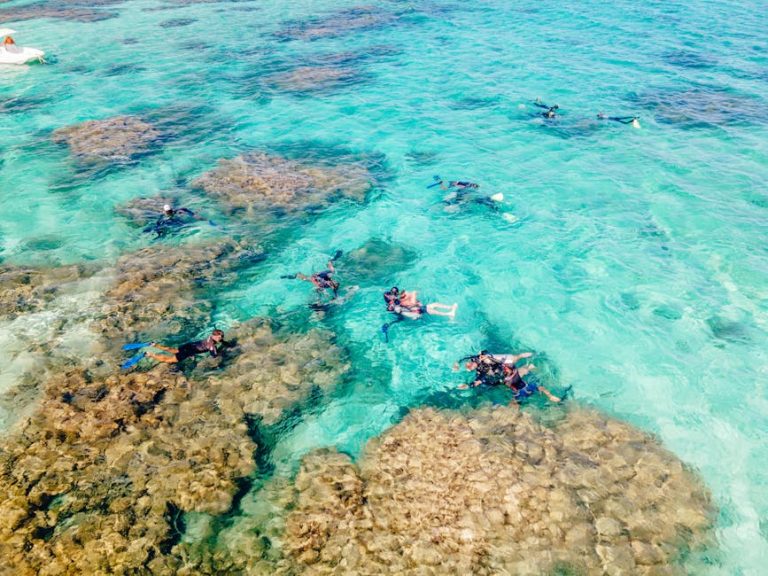
Most tour operators run wreck dives in the morning, which makes sense logistically but also means you’re sharing the site with other boats. By mid-morning, there can be 20 or 30 snorkelers in the water simultaneously. The wreck isn’t large enough to absorb that many people comfortably. You end up in a loose queue, moving along the same path, seeing the same angles. It’s less like exploration and more like being part of an underwater tour group.
The current situation changes daily. Palau’s channels and reefs are heavily influenced by tidal movement and seasonal wind patterns. Some days the water is still enough that you can hover and examine details. Other days there’s enough push that you’re working to stay in position. A strong current can make the snorkel feel less leisurely and more like a chore. Local guides know this, but they’re also working on a schedule. If conditions aren’t ideal, they rarely cancel or reschedule. They adjust expectations instead.
Water temperature is warm year-round, roughly 28 to 30 degrees Celsius, so a wetsuit isn’t strictly necessary. Many snorkelers skip it entirely. The sun exposure is the real concern. The boat ride out and back, plus time in the water, means several hours of direct tropical sun. Sunburn happens fast here, even if you think you’re careful.
The historical layer feels distant
There’s something odd about approaching a wreck that represents a specific historical moment – a ship sunk during wartime, carrying people and cargo. The wreck is a memorial of sorts, but that context doesn’t really transmit through the snorkel experience. You’re looking at a structure, not a story. The guides mention the history briefly, but it’s easy to forget you’re swimming over something that was part of a larger tragedy. The coral and fish have already reclaimed it. The ocean moves on faster than human memory does.
Some operators include multiple wrecks or reef stops on the same trip, which dilutes the time spent at any single location. A few hours of boat time, split across two or three sites, means you might spend only 30 to 40 minutes actually snorkeling the Japanese wreck. It’s enough to see it, not enough to feel immersed in it.
Practical realities for planning
Book through a reputable operator in Koror. There are several, and they’re competitive on price. The cost typically ranges from $80 to $150 per person depending on group size and what else is included. Bring your own snorkel gear if you have it and it fits in your luggage. Rental gear is available but often worn and uncomfortable. A rash guard or light wetsuit is useful for sun protection, even if you don’t need it for warmth.
The best visibility happens during the dry season, roughly November through April, when the water is calmer and clearer. The wet season brings rougher conditions and more suspended sediment. Even in good season, visibility can be unpredictable. Some days you get 20 meters of clarity. Other days it’s half that. It’s not something you can control or predict reliably.
The wreck itself is protected, and you’re not supposed to touch it or remove anything. In practice, enforcement is loose, but the rule exists because the structure is fragile and the site is treated as a war grave. Respect that boundary, even if others don’t.
If you’re already in Palau for diving or reef snorkeling, the Japanese wreck is worth including in your itinerary. It’s different from the living reefs and provides a different kind of visual interest. But it’s not a primary reason to visit Palau. The real draw here is the marine environment – the walls, the channels, the abundance of fish and coral. The wreck is a historical footnote to that larger experience. Approach it with that perspective, and you’ll likely find it more satisfying than if you expect it to be a dramatic centerpiece.