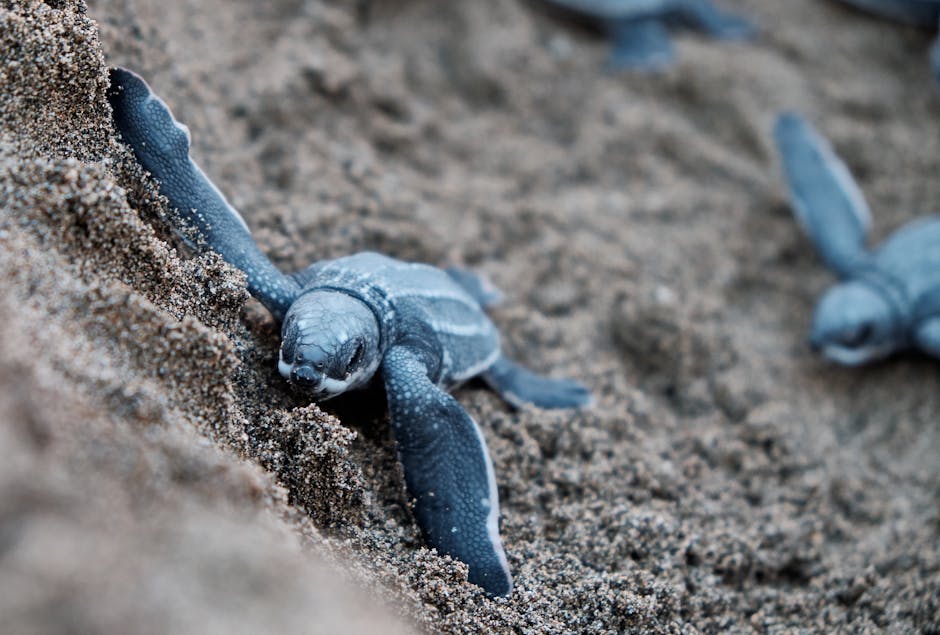
Three sea turtle species nest in the Caribbean: green, hawksbill, and loggerhead turtles. Once hunted to near-extinction, turtle populations are recovering through protection and international cooperation.
Turtle Biology and Life History
Sea turtles are long-lived reptiles with complex life histories. Hatchlings spend years in the open ocean before settling into coastal habitats as juveniles. Maturation takes decades. Females return to their natal beaches to nest—sometimes returning to the exact beach where they were born, guided by geomagnetic navigation.
Conservation Status
Green Turtles: Endangered but recovering due to protection. Caribbean populations have increased significantly in recent decades.
Hawksbills: Critically endangered. Hunted historically for their shells, they remain at very low populations despite strict protection.
Loggerheads: Vulnerable. Long-distance migrations make protection complicated.
Reef Ecology Connections
Adult green turtles are herbivorous, grazing on seagrasses that stabilize Caribbean coastal ecosystems. Loggerheads and hawksbills feed on benthic invertebrates including sponges, jellyfish, and gastropods.