The Brother Islands—Big Brother and Little Brother—are seamounts rising from the deep Red Sea ocean floor. These isolated underwater mountains create unique oceanographic conditions that attract massive concentrations of marine life.
Seamount Ecology
Seamounts disrupt ocean currents, forcing nutrient-rich deep water upward in a process called upwelling. This nutrient enrichment fuels productivity, attracting planktonic organisms and the fish that feed on them. Large predators concentrate to feast on the abundance.
Marine Life Encounters
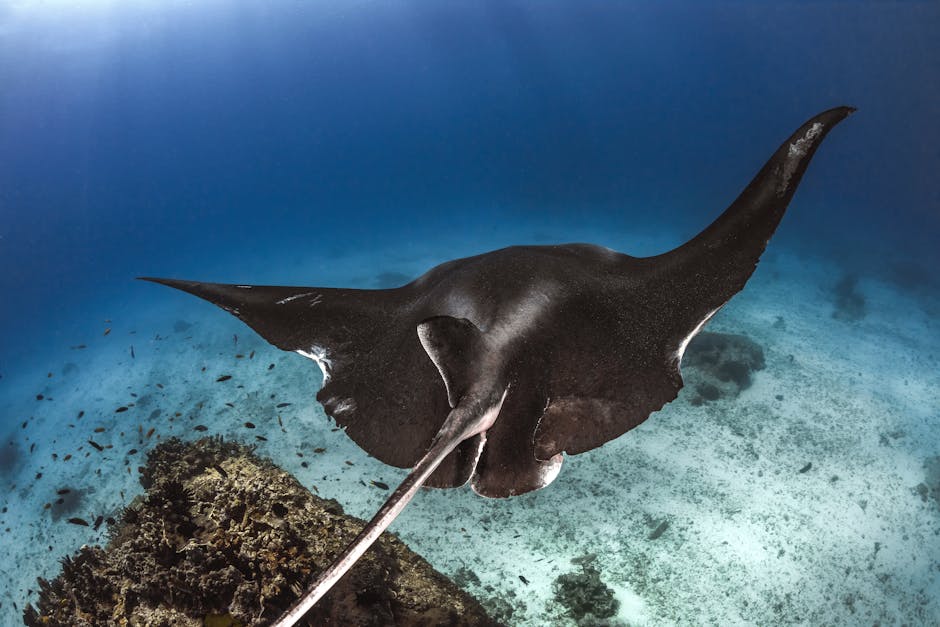
Typical Brother Islands dive includes encounters with schooling hammerheads (sometimes 20+ individuals), large schools of jacks and trevally, barracuda, occasional whale sharks (seasonal), rays (spotted eagle rays, manta rays), and tunas and other pelagic predators.
Diving Challenges
Brother Islands diving is advanced for multiple reasons: strong currents require excellent buoyancy, deep diving (30-40 metres+) requires nitrogen narcosis management, open ocean environment psychologically demanding, limited bottom time at depth, rough sea conditions frequent, and seasickness potential high.
Best Time to Visit
Peak season is May to September when hammerhead aggregations are largest. However, sea conditions are most predictable November to April.