The Coral Triangle harbours some of Earth’s most sophisticated cephalopods—octopuses, cuttlefish, and squid. These molluscs represent a separate evolutionary line of intelligence, with nervous systems fundamentally different from vertebrates yet displaying comparable problem-solving abilities.
Masters of Camouflage and Cognition
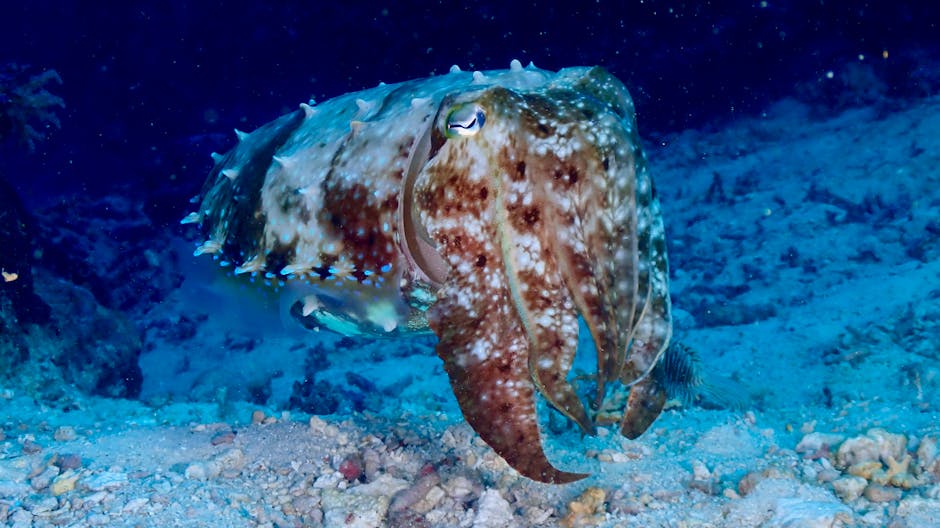
Cephalopods possess remarkable abilities for real-time colour and pattern change. Specialized cells called chromatophores allow instantaneous transformation of appearance. What makes this especially remarkable: cephalopods are believed to be colorblind, yet achieve perfect colour matching to their surroundings.
The giant cuttlefish (Sepia apama) found in temperate Australian waters occasionally strays into southern Coral Triangle waters. These intelligent predators can solve complex puzzles, recognize individual humans, and employ sophisticated hunting strategies involving deception.
Coconut Octopus: Tools and Innovation
The coconut octopus (Amphioctopus marginatus) is endemic to the Indo-Pacific, with significant populations throughout the Coral Triangle. These octopuses carry coconut shells or clam shells, assembling portable shelters and demonstrating clear tool use—a behaviour rarely documented in invertebrates.
The Dangerous Blue-Ringed Octopus
Small but lethal, the blue-ringed octopus carries sufficient venom to paralyze multiple adult humans. Despite their danger, these beautiful creatures are rarely aggressive unless provoked. Their bright blue rings serve as warning coloration.