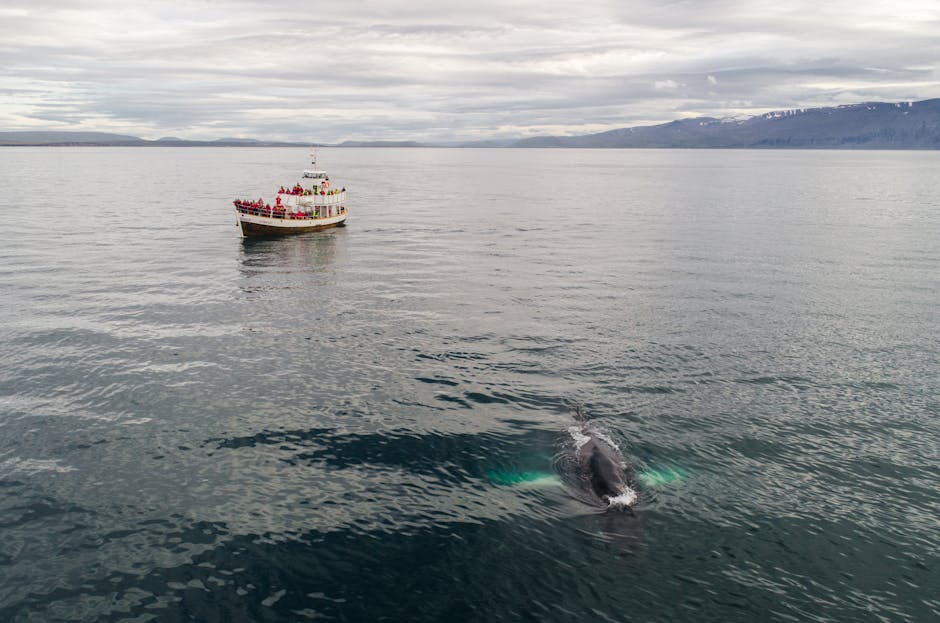
The whale changed direction. That’s the thing I remember most clearly from my first Hervey Bay whale watching trip — not the size of the animal, not the spray from the blow, but the moment a 40-tonne humpback decided to alter course toward our vessel and approached to within ten metres of the hull, rolled onto its side, and looked at us with one eye the size of a dinner plate.
The eye was focused. The whale was assessing us.
This is what Hervey Bay has that other whale watching locations don’t: the whales come to the boats. Not all of them, not all the time, but often enough that the phenomenon has a name — “friendlies” — and a behavioural explanation that marine biologists have been debating and documenting for decades.
Why Hervey Bay
The humpback whale migration along Australia’s east coast moves whales from their Antarctic feeding grounds north to breeding areas around the Whitsundays and Coral Sea, then south again with calves born during the northern stay. The migration is predictable and runs close to the Queensland coast.
Hervey Bay, in the Wide Bay region of southern Queensland, sits in a natural configuration that produces the whale watching conditions. The bay is sheltered by Fraser Island — the world’s largest sand island — on its eastern side, creating calm water in a broad, protected embayment. The southward migration, from approximately August through October, passes through this sheltered water, and the whales regularly stop to rest, socialise, and in some cases to play.
The playing and socialising behaviours that whales exhibit in Hervey Bay — the spy-hopping, the breaching, the extended surface presence, and the approaches to vessels — are not, according to the research, the same behaviours they show in open ocean or at other points of the migration. Something about the bay’s shelter and the southern migration’s lower urgency (the urgency to feed in the north was the northward journey; the calves are born; the pressure is reduced) produces a population that’s genuinely at ease.
The “friendly” behaviour — the deliberate approach to vessels — has been documented since organised whale watching began in the bay in the 1980s and is still not fully explained. The vessels stop their engines; the whales come. The encounters on good days, with a genuinely curious humpback spending twenty or thirty minutes at the hull, surfacing, resting, occasionally twisting to look at the people above — these are among the finest wild animal encounters available in Australia.
The Season
The Hervey Bay whale watching season runs from approximately late July through October, with August and September being the peak months for both whale numbers and the specific social behaviours that make Hervey Bay encounters distinctive. The season’s length — roughly twelve weeks — means more flexibility for booking than tighter-season locations like Ningaloo whale sharks.
August produces the highest number of whales in the bay simultaneously and the most active social behaviour. September and October see the season’s tail end, with fewer whales but a higher proportion of cows with calves — the southward migration is family-organised, and the specific vulnerability and visible attachment of mothers to young calves adds a different quality to the encounters.
Operators and What to Look For
The Hervey Bay whale watching industry is well-developed — multiple operators, a range of vessel sizes and trip formats, departing from the Urangan Boat Harbour daily through the season. The differences that matter:
Vessel size. Smaller vessels (under 20 passengers) have more flexibility to position themselves around whales and spend more time with individual animals. Larger vessels carry more people and provide a more social experience but can be less manoeuvrable in response to whale behaviour.
Time on the water. Half-day trips (three to four hours) versus full-day trips (six to eight hours). More time on the water means more likelihood of encountering multiple pods and witnessing extended interactions. Full-day trips consistently produce better results, particularly mid-season when whale density in the bay is highest.
Guarantee policies. Many operators offer a return trip if no whales are sighted — this is common enough practice that “whale sighting guarantee” is standard in the industry. In August and September, the actual probability of a sighting is very high; the guarantees are insurance against the occasional off day.
Marine researcher partnerships. Several operators carry researchers or naturalist guides who are contributing to long-term population studies and can provide interpretive context for what you’re watching. These trips produce a different depth of experience from commentary-only trips.
Fraser Island: The Context
Fraser Island — K’gari in the language of the Butchulla people — sits directly to the east of Hervey Bay and is the largest sand island in the world: 122 kilometres long, built entirely from sand transported north by oceanic currents over hundreds of thousands of years. It has freshwater lakes (Mackenzie Lake, Lake Wabby) of extraordinary clarity and colour, old-growth forest growing in sand, and 4WD tracks that run its full length on the beach and through the interior.
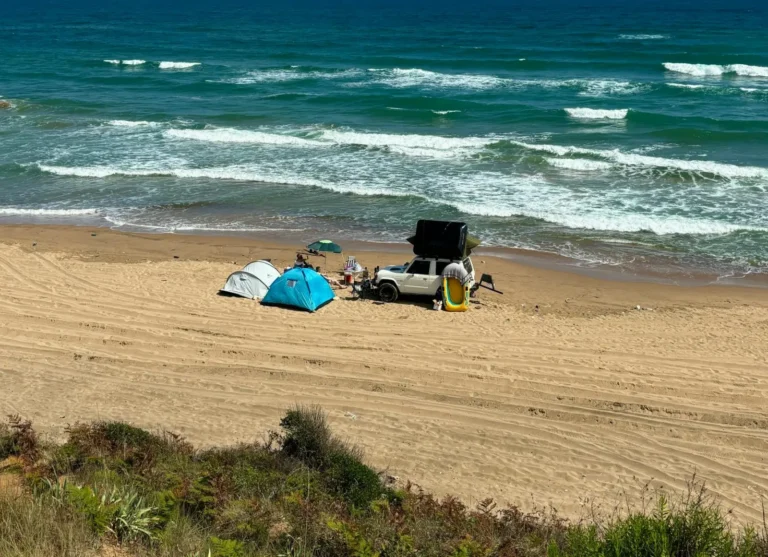
Most Hervey Bay visitors include a Fraser Island day trip or multi-day 4WD itinerary alongside the whale watching. The combination — the bay and its whales from the water, the island and its dingo-inhabited forest from the land — makes Hervey Bay one of the most environmentally rich Queensland destinations for visitors who aren’t primarily reef-focused.
The dingoes of Fraser Island are the most genetically pure dingo population in eastern Australia — they’ve been geographically isolated from mainland dogs and the consequent hybridisation long enough to retain the original dingo genotype. They’re also wild animals in an area with significant human traffic, which has produced, historically, incidents involving children. The current management protocols — no feeding, no approaching, always supervise children — are not bureaucratic overcaution. They reflect the animal’s actual character.
Getting to Hervey Bay
Hervey Bay has a domestic airport with connections to Brisbane (approximately 50 minutes). Alternatively, the town is five hours from Brisbane by road on the Bruce Highway — the drive north through Noosa and the Sunshine Coast is pleasant enough that it’s worth doing slowly over two days rather than as a single push.
The town of Hervey Bay itself is a comfortable, unhurried coastal community without significant tourist infrastructure pressures — it has the character of a regional Queensland town that happens to have extraordinary whale watching attached to it, rather than a resort destination that has been built around the activity. This suits it well.
Book your whale watching tour before you arrive. The good operators fill their peak-season departures weeks in advance, and last-minute availability in August and September is limited to vessels that had cancellations.
The whale will come to the boat. Have your camera ready, but lower it when the eye appears. Some things are better looked at than photographed.