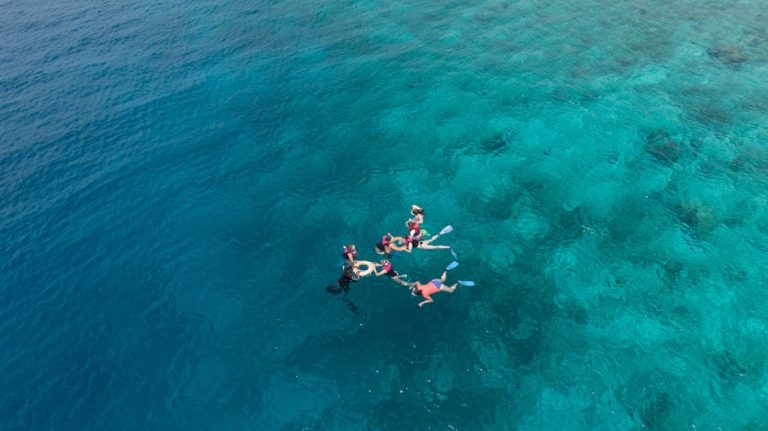
A diver I respect enormously once told me that the most important thing she does for the reef is show up and bring money. She meant it seriously, and I think she’s right, up to a point.
Reef tourism — snorkelling, diving, glass-bottom boat trips, scenic flights — generates approximately six billion Australian dollars per year for the Queensland economy. The political and economic case for protecting the Great Barrier Reef rests substantially on this number. Without the tourism value, the reef competes in a cost-benefit analysis against industries that extract direct economic value — fishing, agriculture, coastal development — and it doesn’t always win.
The presence of engaged, paying visitors on and around the reef is not just recreation. It’s one of the arguments for the reef’s existence in economic terms that policymakers respond to.
But the type of tourism, and how it’s conducted, matters enormously.
What Good Reef Tourism Looks Like
The difference between reef tourism that genuinely contributes to reef health and reef tourism that incrementally degrades the thing it’s selling is specific and measurable.
Good operators train their customers. A snorkelling trip where the guide spends twenty minutes explaining what coral is, why it shouldn’t be touched, what the bleached sections mean, and how to use fins without kicking the reef produces visitors who are assets rather than liabilities. An operator who loads people into the water without briefing them produces the opposite.
Good operators self-regulate site access. The most visited reef sites on the GBR — Saxon Reef, Agincourt, the Whitsundays sites — receive enormous visitor numbers daily. The cumulative physical impact of that many people in the water, even if each individual is behaving well, creates pressure on the reef substrate through increased turbidity, anchor damage, sunscreen chemical loading, and stress to marine life from noise and presence. Operators who voluntarily rotate sites, limit daily visitor numbers, and avoid anchoring on reef substrate are demonstrably less damaging than those who don’t.
Good operators pay their reef fees and support levy programs. The Environmental Management Charge — the levy paid by commercial reef tourism operators per visitor — funds the GBR Marine Park Authority’s compliance, research, and management programs. Operators who resent this cost and lobby against it are, in effect, arguing to reduce the management budget for the resource their entire business depends on.
What You Can Do as a Visitor
The impact of any individual visitor to the reef, taken in isolation, is genuinely small. The aggregate impact of millions of visitors is not. Your behaviour on the reef adds to or subtracts from that aggregate, and the specific behaviours that matter are these:
Don’t touch anything. Coral is an animal and physical contact damages the protective mucus layer, introduces bacteria, and stresses the colony. The “it’s just a small touch” calculation fails at scale — a section of reef that is touched by 200 snorkellers per day suffers real cumulative impact from “small touches.” Keep your hands tucked in.
Control your fins. The most common cause of accidental reef damage by snorkellers and inexperienced divers is fin contact with the reef structure. On the surface, practise a head-up technique that keeps your fins below you rather than behind you. Underwater, develop the buoyancy control to stay horizontal and clear of the bottom.
Use reef-safe sunscreen, or better still wear a rash vest. Oxybenzone and octinoxate — common UV-filtering chemicals in sunscreen — are toxic to coral at concentrations that accumulate at heavily visited reef sites. Reef-safe formulations using mineral filters (zinc oxide, titanium dioxide) are widely available. A rash vest eliminates the need for sunscreen on most exposed skin and is more reliable protection anyway.
Don’t feed marine life. Feeding fish changes their natural behaviour, creates dependency, and in some cases causes direct harm — feeding bread or inappropriate food to reef fish produces nutritional deficiencies. Operators who conduct fish feeding as entertainment are trading short-term spectacle for long-term reef health.
Book with operators certified by Eco Tourism Australia. The Advanced Ecotourism Certification is the highest standard in the Australian tourism industry for environmental management. Operators who carry it have been audited against rigorous criteria for environmental impact management, staff training, and conservation contribution. It’s not a perfect guarantee, but it’s a meaningful filter.
The Psychology of Reef Visits
Something happens to most people when they get in the water on a coral reef for the first time, and in my experience it’s consistent enough to be worth describing. There’s a transition — sometimes rapid, sometimes gradual over the course of a trip — from the reef being an abstract destination to it being a specific place that they care about.
This transition is the reef’s most powerful conservation asset. People who have swum with a turtle, who have hovered above a coral garden in clear water and watched parrotfish work, who have floated at the surface on a calm morning with a manta ray moving below them — these people vote differently on reef issues than people who haven’t. They donate. They change sunscreen brands. They’re skeptical of politicians who diminish reef science.
The GBR needs visitors in the water precisely because it needs advocates who have felt something rather than read something. That’s not an argument for ignoring the impact of tourism on the reef. It’s an argument for ensuring that when people visit, the experience is managed well enough that they leave caring, rather than simply entertained.
The Operators Worth Supporting
Several Cairns and Port Douglas operators have built reputations over decades for the quality of their environmental management and their genuine contribution to reef research and conservation:
Reef Biosearch, operating from Port Douglas, pioneered the integration of marine biologist guides into the dive tourism experience and has contributed substantially to GBR citizen science programs. Quicksilver Cruises’ Agincourt Reef platform was among the first to achieve Advanced Ecotourism Certification. Tusa Dive and Mike Ball Dive Expeditions have long-standing relationships with reef monitoring programs.
The pattern is consistent: operators who have invested in the reef’s long-term health, not just its short-term marketability, produce better experiences and better conservation outcomes simultaneously.
Support them. Show up. Bring money. And behave well when you’re there.