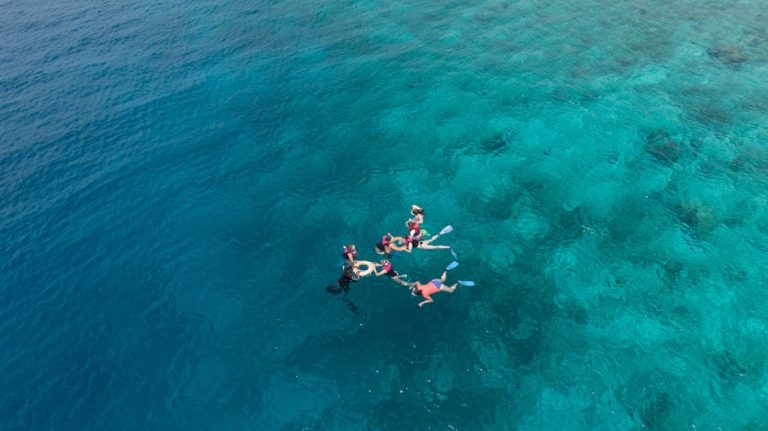
The first time I flew over the Great Barrier Reef — not to it, but over it, in a light plane out of Cairns — I understood why people struggle to describe it accurately. From two thousand metres, the reef system doesn’t look like a reef at all. It looks like weather. The colours shift and bleed into each other — deep cobalt blue of open water, pale turquoise of shallow lagoons, the dark olive-green of reef structure, the bright white of sand cays — across a distance so vast that the horizon curves visibly beyond it.
The Great Barrier Reef is roughly 2,300 kilometres long. It contains approximately 3,000 individual reefs and 900 islands. It is, by every measure anyone has applied to it, the largest living structure on Earth. And it is under more pressure than at any point in its several-million-year history.
Both of those things are true simultaneously, and both of them matter.
What the Reef Actually Is
The Great Barrier Reef is not a single continuous structure. It’s a system — a collection of reef types distributed along the northeastern Australian continental shelf from the tip of Cape York Peninsula in the north to just south of the Tropic of Capricorn near Gladstone in the south.
The system includes fringing reefs (which grow directly against the coastline of mainland Australia and its offshore islands), platform reefs (isolated oval or irregular reef structures rising from the continental shelf), ribbon reefs (elongated, narrow reef structures running parallel to the shelf edge in the far north), and coral cays (low islands formed from accumulated coral rubble and sand on top of platform reefs).
The Coral Sea, to the east of the main reef system, contains additional isolated reef structures — the Coral Sea atolls including Osprey, Bougainville, and Holmes reefs — that are part of the same geological province but exist outside the formal GBR Marine Park boundary.
The reef grows on the Queensland continental shelf, which is relatively shallow — rarely more than 60 metres to the shelf edge, and often much shallower on the inner shelf. This shallowness is what allows reef-building corals to thrive: they need sufficient light for their symbiotic zooxanthellae algae to photosynthesise, which means they can’t grow below about 50 metres in clear water, and shallower in turbid conditions.
Three Zones, Three Different Experiences
Experienced GBR divers talk about the inner, mid, and outer reef as distinct environments, because they are.
The inner reef — closest to the mainland, accessible from Cairns, Port Douglas, and the Whitsundays on day trips — tends to have lower visibility (10 to 15 metres typically), higher nutrient levels due to terrestrial runoff from the Queensland coast, and more impacted coral communities on reefs near major population centres. It’s the most visited and the most compromised. It’s also where most people have their first GBR experience, and the best inner reef sites — Norman Reef, Saxon Reef, Agincourt Reef accessed from Port Douglas — are still genuinely excellent.
The mid-shelf reef — Michaelmas Cay, Milln Reef, Flynn Reef near Cairns — sits in cleaner water with better visibility, generally 15 to 25 metres, and more intact coral communities. These are the workhorse sites of the Cairns day-trip industry, consistently good, reliably accessible.
The outer reef and ribbon reefs — Osprey, the Cod Hole, Ribbon Reef No. 10, the far northern reefs accessible from Cooktown — is where the GBR reveals what it looks like with minimal human interference. Visibility of 30 to 40 metres is common. Shark populations are dense. The soft coral coverage on outer reef walls is, in places, absolute — every square centimetre of structure covered in colour. These sites are accessible primarily by liveaboard.
The Species Numbers
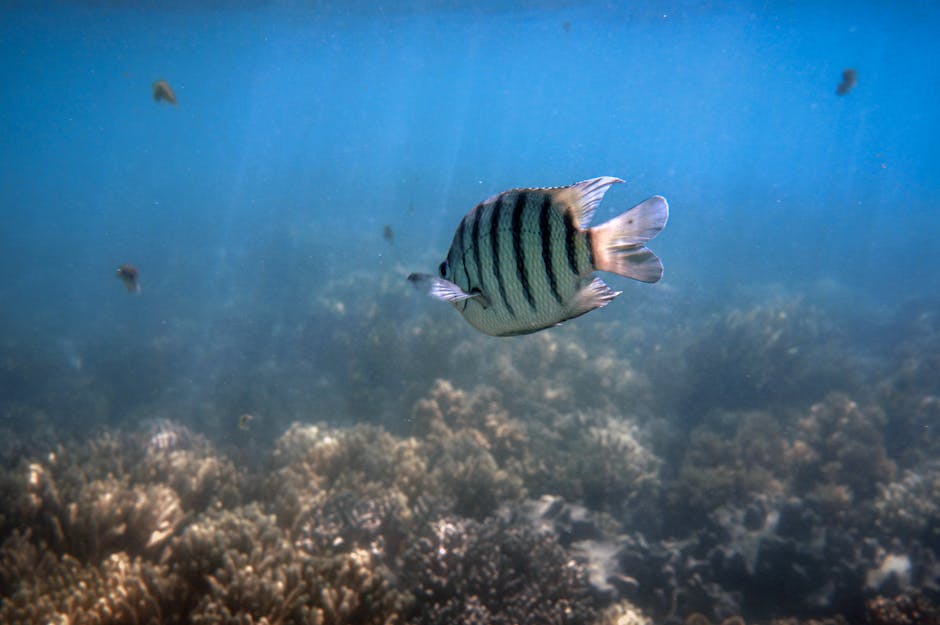
The numbers associated with GBR biodiversity are genuinely staggering and worth stating plainly. The reef supports approximately 1,625 species of fish, 3,000 species of molluscs, 630 species of echinoderm, 500 species of marine worm, 215 species of birds, and 6 of the world’s 7 sea turtle species. It has 133 species of sharks and rays. It has approximately 600 species of hard and soft coral.
This biodiversity exists because the GBR is old enough (the current reef formation is approximately 8,000 years old, built on geological foundations much older) and large enough to have accumulated extraordinary ecological complexity. The reef is not just habitat — it’s a community of communities, with each zone, each depth, each substrate type supporting its own assemblage of species. The reef fish community on a shallow Acropora flat bears almost no resemblance to the community on a deep outer wall at 25 metres. Both are on the same reef.
The State of the Reef
I want to address this directly, because the question I’m most often asked by people planning a GBR trip is some version of: “Is it worth it? Is there anything left?”
Yes. Emphatically yes. The GBR has suffered serious damage from back-to-back mass bleaching events in 2016, 2017, 2020, and 2022, and the northern sections of the reef — roughly from Cairns to Cape York — show widespread bleaching impact on shallow water communities. The crown-of-thorns starfish outbreaks of recent decades have further reduced coral cover on many mid-shelf reefs.
And yet: a significant portion of the reef retains high coral cover and full ecological function. The outer reefs and ribbon reefs in the far north, while affected by bleaching, have also demonstrated meaningful recovery between events. The Coral Sea atolls, more remote and less affected by water quality issues, maintain extraordinary condition. Deep reef communities below 30 metres — the so-called mesophotic zone — show less bleaching impact and may serve as refugia for species impacted in shallower water.
The reef is not dead. It is wounded, and the extent of the wound depends on where you are within a 2,300-kilometre system. The most accurate answer to “is it worth it?” is: go now, go to the outer reef if you can, go with your eyes open and your expectations calibrated to the current reality, not to the GBR of 1985.
What you will find, even now, is one of the most extraordinary natural environments on Earth. That’s not spin. It’s what I find every time I go back.
Getting There, Getting Onto It
The primary access points for GBR diving are Cairns and Port Douglas in the north, the Whitsundays in the central section, and Gladstone/Heron Island in the south. Each gives you access to different parts of the reef system with different characters.
Cairns has the most developed dive industry in Australia — dozens of operators, multiple daily departures, courses available every day of the year, liveaboard vessels that reach the Coral Sea. It’s the default choice for first-time GBR visitors and a solid base for serious divers.
Heron Island, a coral cay resort on a platform reef 80 kilometres off Gladstone, offers something different: you sleep on the reef, step off the beach into the water, and dive a site that’s been a marine research station since 1951. The diving is exceptional, the island itself is remarkable, and the loggerhead turtle nesting in season is an experience that stands entirely apart from anything else the GBR offers.
Go to the reef. Go more than once. Each time, it will be different.