Most visitors first see the Great Barrier Reef in the middle of the day. Tour boats arrive from the mainland, snorkelers gather along floating platforms, and the water surface is usually textured by wind. It can still be a remarkable experience, but it rarely reveals the reef at its most subtle. The reef feels different in the early hours, before the wind begins to move across the Coral Sea.
I learned this during one of my first trips to the outer reef years ago. Our boat had anchored overnight near a reef edge several hours offshore from Cairns. When I stepped onto the deck shortly after sunrise, the water looked almost motionless. The reef appeared through the surface like a faint map drawn in shades of turquoise and dark blue.
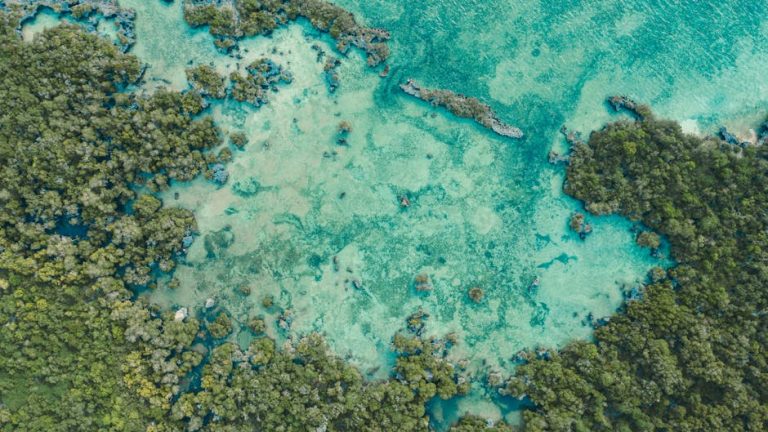
Morning light behaves differently over coral reefs than it does later in the day. At low angles the sunlight travels through the water more softly, revealing shapes rather than colors. Coral bommies cast shadows on the sand below them. Channels between reef ridges appear as darker lines that curve toward deeper water.
From above, the reef begins to resemble a landscape rather than an underwater scene.
Watching the Reef Wake Up
One habit I developed over time is to spend the first few minutes on the reef simply observing the water rather than immediately jumping in. When the sea is calm, the surface tells you a surprising amount about what lies underneath. Slight changes in texture hint at current movement. A small ripple moving across otherwise flat water can reveal a shallow coral ridge just below the surface.
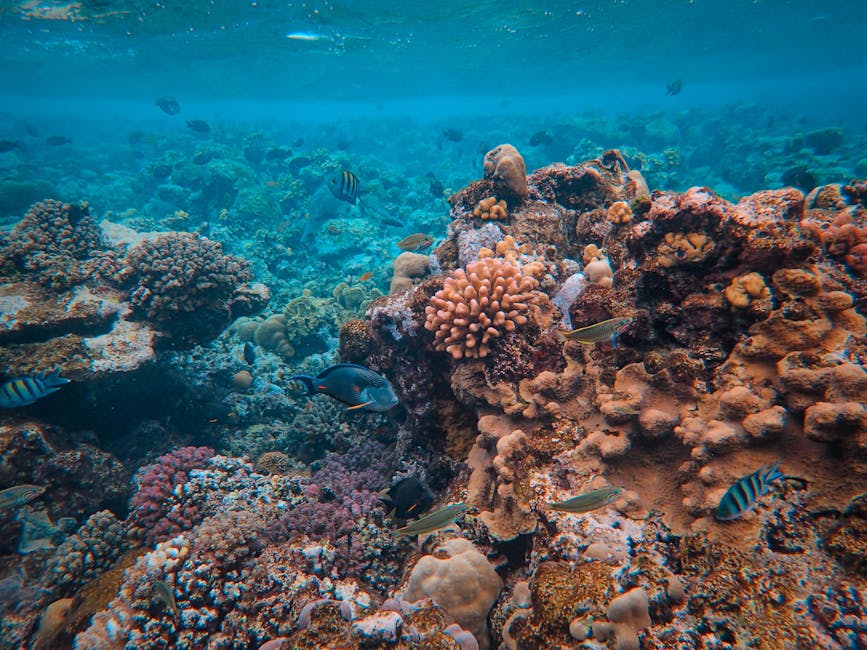
Early in the morning, fish activity begins slowly. At first the reef may appear quiet. Then small movements become noticeable along the coral heads. A few damselfish dart between coral branches. A lone parrotfish drifts across the sand patch near the reef edge.
Within half an hour the reef becomes noticeably busier. Schools of fusiliers begin moving along the outer slope, following the invisible paths where currents bring plankton through the reef. Butterflyfish appear in pairs along the coral ridges. Occasionally a turtle surfaces nearby before gliding back down toward the coral gardens.
These changes happen gradually enough that many travelers miss them. But when you stay in the water long enough, the reef begins to feel less like a static environment and more like a living system adjusting to the day.
The Structure Beneath the Surface
The outer sections of the Great Barrier Reef have a structure that becomes easier to understand when seen from calm water. Reef flats often extend toward the open sea before dropping into deeper slopes that descend into the Coral Sea.
In the early morning the boundaries between these zones appear clearly from the surface. Pale sand channels weave between coral gardens, creating natural pathways through the reef. The water above these channels often appears slightly darker, giving the impression of narrow rivers flowing through the coral.
Floating quietly above the reef slope can feel almost like hovering above a cliff edge. The shallow coral plateau suddenly gives way to darker blue water, where the reef wall drops toward deeper depths. Fish activity tends to increase along these slopes because currents bring nutrients past the coral formations.
It is not unusual to see large schools of fish gathering along these edges in the early hours. Sometimes they move slowly as a group, turning together when the current shifts direction.
Moments like this make it easier to understand why the reef supports such complex marine life. The structure of the reef itself creates natural corridors where food and currents concentrate.
The Water Before the Wind
One reason the early morning feels so distinctive on the outer reef is the temporary absence of wind. Along the Queensland coast, wind patterns tend to strengthen during the late morning and afternoon, especially during the dry season months.
By mid-day the sea surface often becomes more textured. Small waves form across the reef, and the visibility from above becomes slightly reduced as sunlight scatters across the moving water.
Early morning offers a brief window when the ocean surface remains smooth enough to see deep into the reef structure. From the boat you can sometimes watch fish moving several meters below the surface. Coral formations appear sharply defined rather than blurred by reflected light.
This clarity also changes how the reef feels while snorkeling. Swimming over a calm reef allows you to notice details that might otherwise be missed: the way coral polyps extend from their skeletons, the subtle color differences between coral species, and the movement of small invertebrates living among the coral branches.
These details disappear once the wind begins to disturb the surface.
The Quiet Between Boat Arrivals
Another aspect of early reef mornings is the relative absence of people. Most reef tours leave mainland ports after sunrise and take several hours to reach the outer reefs. For a short period in the early morning, many reef sites remain empty.
This quiet period changes the atmosphere significantly. Without engine noise or large groups entering the water, marine life tends to behave naturally around the reef structures. Fish schools remain closer to the coral rather than retreating toward deeper water.
It is during these quieter hours that some of the most memorable wildlife encounters occur. On one morning near a reef north of Lizard Island, I watched a reef shark glide slowly along the reef slope while the water remained almost completely still. The encounter lasted less than a minute before the shark disappeared into deeper water.
Moments like this rarely happen during the busiest parts of the day.
How Light Changes the Reef
Light plays an enormous role in how coral reefs appear to visitors. By mid-morning the sun sits high enough above the horizon to illuminate the coral gardens directly. This is when the reef becomes visually dramatic, with bright colors and sharp contrasts between coral species.
But earlier light produces a different effect. Instead of intense color, the reef appears layered and textured. The coral shapes become more noticeable than the colors themselves.
From the surface you can often see how coral colonies compete for space. Some grow in rounded mounds, while others form branching structures that resemble underwater forests. Between them lie sandy areas where rays occasionally settle during the night.
As the sun climbs higher, these patterns become less visible from above. The reef transforms from a textured landscape into a brightly colored underwater scene.
Shallow Lagoons and Sand Channels
Many sections of the Great Barrier Reef contain shallow lagoons behind the main reef crest. These lagoons often appear calm even when the outer reef experiences waves.
Snorkeling through lagoon areas early in the day reveals a different environment from the reef slopes. Coral gardens tend to grow in scattered clusters separated by wide sand patches. Small reef fish gather around individual coral heads, creating small communities that revolve around each structure.
Sand channels between coral heads often act as pathways for larger fish moving across the reef. Sometimes these channels form winding corridors that lead toward deeper water at the reef edge.
Drifting slowly through these channels gives the impression of traveling across an underwater plain.
Temperature and Tides
Water temperature can change subtly during the morning hours as well. Early in the day the water often feels slightly cooler, especially after calm nights when surface temperatures drop slightly.
Tidal movement also influences how the reef behaves during the morning. Rising tides bring fresh ocean water across the reef flats, increasing fish activity in shallow areas. During falling tides, water drains slowly through channels toward the reef edge.
These movements shape how marine life distributes itself across the reef. Experienced divers often plan their reef visits around these tidal patterns.
Even casual observers begin to notice how the reef changes as the water level shifts.
Leaving the Reef
Eventually the calm morning gives way to the activity of the day. Tour boats appear on the horizon. The wind begins to ripple across the water surface. Snorkelers gather near floating platforms and mooring lines.
The reef does not lose its beauty once this happens, but the atmosphere shifts. The quiet rhythm of the early hours gives way to a more energetic scene.
When I think back on my time visiting the outer Great Barrier Reef, the moments that remain most vivid rarely involve the busiest parts of the day. They are the quiet early hours when the sea remains calm and the reef reveals itself gradually beneath the surface.
Those mornings feel less like a performance staged for visitors and more like a glimpse into the natural rhythm of the reef itself.
That slow unfolding is what continues to draw me back to coral reefs around the world.