Shallow reef lagoons rarely attract the same attention as dramatic outer reef walls. Divers often prefer steep coral slopes where large fish move through deeper water, and photographers gravitate toward brightly colored coral gardens along reef edges. Lagoons, by comparison, can appear almost empty from the surface. Their calm water hides a quieter environment that reveals itself gradually.
The first time I spent several hours snorkeling across a shallow lagoon, I remember wondering why the water looked so pale from the beach. The reef crest protected the lagoon from open waves, and sunlight reflected off the sandy bottom, creating wide patches of turquoise water that seemed almost too bright. Only after swimming further from shore did the coral formations begin appearing beneath the surface.
That gradual discovery is one of the defining characteristics of lagoon snorkeling. Instead of a sudden drop into deep water, the reef unfolds slowly, one coral patch at a time.
Entering the Lagoon
Many reef lagoons begin with wide stretches of sand broken by scattered coral heads. From above, these coral structures resemble dark islands rising from the lagoon floor. The spaces between them form sandy corridors where rays occasionally glide across the bottom.
Swimming through these areas feels different from snorkeling along reef slopes. The environment is more open. Instead of moving along a single coral wall, you navigate through a landscape of coral clusters separated by bright sand.
Water depth in lagoons usually remains shallow enough that sunlight reaches the bottom clearly. Even in several meters of water, details remain visible. Small reef fish move between coral heads, while sea cucumbers rest quietly along the sandy sections.
At first the lagoon may appear sparse compared with dense reef walls. After a few minutes in the water, however, the patterns of life begin to appear.
Coral Gardens Hidden in Plain Sight
The most vibrant coral areas inside lagoons often sit slightly deeper than the surrounding sand flats. These coral gardens develop where the reef structure rises toward the surface, creating clusters of branching corals, plate corals, and rounded coral heads.
Once you reach these areas, the lagoon suddenly becomes lively. Small fish gather around the coral branches, forming loose groups that move constantly between shelter and open water. Damselfish defend tiny territories among the coral, darting toward anything that comes too close.
Butterflyfish often appear along the edges of these coral gardens, moving in pairs across the reef surface. Their slow, deliberate swimming contrasts with the quick movements of smaller reef fish.
These coral clusters function almost like small cities scattered across the lagoon floor.
Reading the Water Surface
One of the useful skills lagoon snorkeling teaches is how to read subtle changes in the water surface. When the sea remains calm, the surface often reflects the reef structure below.
Dark patches may indicate dense coral formations, while lighter areas suggest sand or deeper water. In some places faint lines appear on the surface where currents move slowly through the lagoon.
Following these patterns can help guide swimmers toward interesting reef areas without needing to dive repeatedly beneath the surface.
Experienced snorkelers sometimes spend several minutes observing the lagoon before entering the water, identifying coral clusters that may hold the most marine life.
Marine Life in the Lagoon
Although lagoons rarely host the large pelagic species found along outer reef slopes, they support a surprising range of smaller marine life. Many reef fish spend part of their lives inside protected lagoon environments where currents remain weaker.
Juvenile fish often gather among branching corals where they find shelter from predators. Parrotfish occasionally pass through shallow areas grazing along coral surfaces, leaving faint trails of sand behind them.
Some lagoons also attract turtles that move slowly across the reef floor searching for food. When spotted from the surface, their rounded shapes appear briefly before disappearing among coral heads.
Encounters like these usually happen unexpectedly during quiet moments of observation.
The Role of Tides
Tidal movement plays a large role in shaping lagoon conditions. As the tide rises, fresh ocean water flows across the reef crest and into the lagoon, bringing nutrients and small organisms with it.
This movement often increases fish activity as the incoming water spreads across the coral flats. During falling tides, water gradually drains back through channels in the reef, sometimes creating gentle currents within the lagoon.
Snorkelers who stay in the water long enough can often feel these shifts as the water begins moving more steadily in one direction.
Watching how the lagoon responds to tides reveals another layer of the reef’s daily rhythm.
The Quiet Atmosphere of Protected Water
Perhaps the most noticeable difference between lagoons and outer reef areas is the sense of calm. Because the reef crest blocks much of the open ocean swell, lagoon water usually remains smoother than the sea beyond the reef.
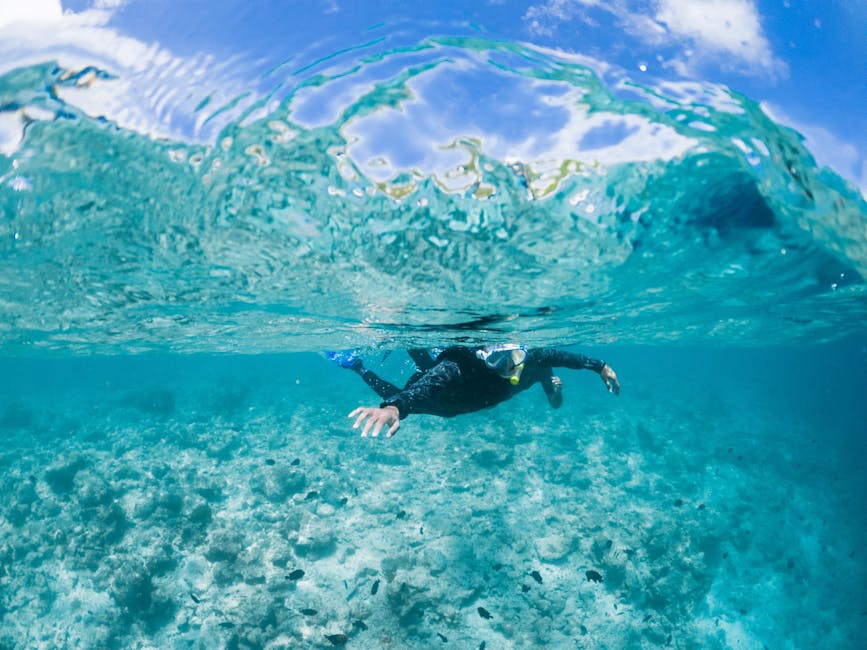
This calm surface allows light to penetrate deeper and makes it easier to observe details below the waterline. Floating quietly in a lagoon often feels more like hovering above a landscape than swimming through open sea.
In especially calm conditions, reflections of clouds drift slowly across the water surface while coral formations remain visible below.
The effect can be almost meditative.
Afternoon Light Across the Lagoon
Late afternoon often produces the most striking views across shallow lagoons. As the sun lowers toward the horizon, the angle of the light begins highlighting the shapes of coral formations rather than simply illuminating their colors.
Coral heads cast long shadows across the sand, revealing the contours of the lagoon floor. Sand patches glow softly beneath the water, while deeper coral areas appear darker by comparison.
These shifting light patterns give the lagoon a sense of depth that can be difficult to capture in photographs but becomes obvious to anyone floating quietly above the reef.
The longer you stay in the water, the more these subtle details emerge.
Leaving the Lagoon
Eventually the calm water begins reflecting the sky more strongly as the sun approaches the horizon. Coral formations fade slightly from view as the lagoon darkens.
Swimming back toward the beach during these moments often feels unhurried. The lagoon returns to the quiet atmosphere that first made it appear empty from the shore.
Yet after spending time exploring its coral gardens and sandy corridors, it becomes clear that these shallow reef environments hold far more life and complexity than their calm surface suggests.
That quiet complexity is what makes lagoon snorkeling such a rewarding experience.