Lihou Reef is not on most divers’ radar, and there’s a simple reason for that: it’s extraordinarily difficult to reach. Sitting 550 kilometres east of Cairns, it’s beyond the range of standard liveaboard itineraries and requires either a dedicated charter or a passage on a research vessel. The result is that one of the largest coral atolls in the world – the lagoon alone covers 2,500 square kilometres – is visited by perhaps a few dozen divers per year.
I’ve been to Lihou once, on a research vessel passage that included two days of diving on the outer walls and in the lagoon. What I saw was a reef that looked, in many respects, like a reef from another era – dense coral coverage, fish populations that showed no sign of fishing pressure, shark densities that I haven’t encountered anywhere else. The remoteness is the conservation strategy, and it’s working.
Scale and Structure
The scale of Lihou is difficult to convey. The reef ring is 125 kilometres long – you could drive it in two hours on a highway, but navigating it by boat takes the better part of a day. The lagoon is shallow enough to anchor in most places (10-30 metres) but large enough that the far shore is below the horizon. There are several small coral cays within the lagoon, used as nesting sites by seabirds and turtles.
The outer walls have the characteristic profile of all the Coral Sea atolls – vertical drops to 2,000 metres, exceptional clarity, strong currents on the windward side that concentrate pelagic life. The fish density on the outer walls is among the highest I’ve encountered anywhere: schools of trevally and barracuda that extend for 20-30 metres, reef sharks in numbers that would be remarkable on any other reef, and the occasional hammerhead or silvertip cruising the deeper sections of the wall.
The Lagoon
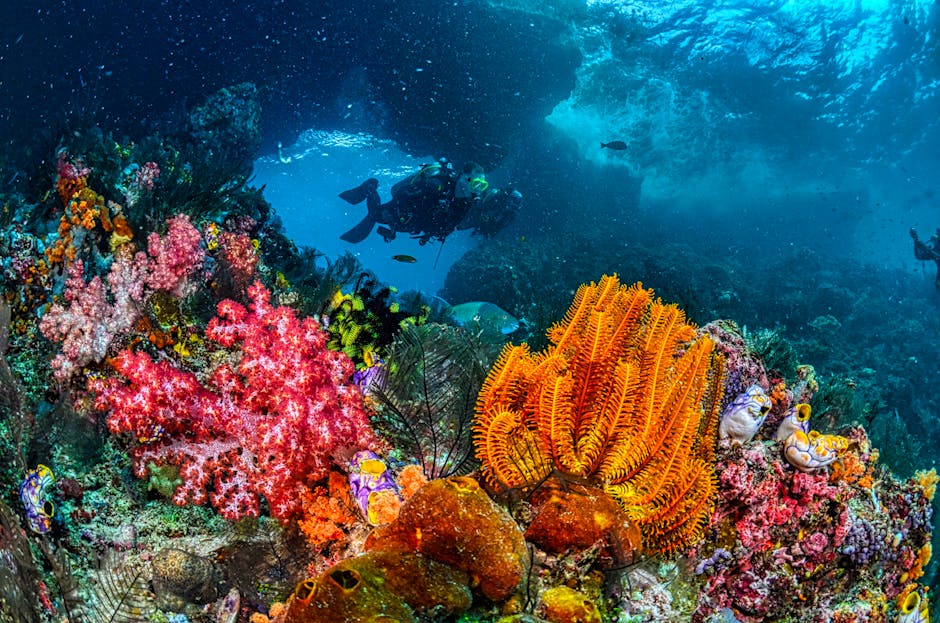
The Lihou lagoon is a world unto itself. The coral coverage on the lagoon bommies is extraordinary – plate corals, staghorn thickets, and massive Porites heads in densities that I haven’t seen on any accessible reef. The fish life is correspondingly dense: large grouper, schools of snapper, and the full complement of reef fish species in abundances that reflect a system with minimal fishing pressure.
The lagoon also hosts a significant green turtle population. The cays within the lagoon are nesting sites, and the seagrass meadows support grazing turtles year-round. On our second day in the lagoon, we counted 23 turtles from the deck of the research vessel in a single hour – a density that would be exceptional anywhere else but felt, at Lihou, simply normal.
Lihou is not a place most people will ever dive. But knowing it exists – that there are still reefs this remote, this intact, this far from human pressure – matters. It’s a reference point, a baseline, a reminder of what the reef system looked like before we started changing it. That’s worth something, even to people who will never see it.