Reef tours occupy a strange space in travel. They’re accessible enough that almost anyone can do them, yet they’re also genuinely unpredictable. You show up at a dock somewhere tropical, get herded onto a boat with twenty other people, and head out to see what’s actually beneath the surface. What you find depends on timing, season, water conditions, and a fair amount of luck. After spending time on reefs across different regions – the Caribbean, Southeast Asia, the Red Sea, and the South Pacific – the reality feels quite different from what most travel sites describe.
The first thing to understand is that marine life doesn’t perform on schedule. Reef tours operate on a fixed itinerary, but fish, turtles, and rays follow their own patterns. You might see nothing but small schooling fish and coral on one dive, then encounter a sea turtle and a reef shark on the next tour at the same location. The guides know the reef well and can read subtle signs – water temperature, time of day, season – but they can’t guarantee what you’ll encounter. This unpredictability is part of what makes reef diving genuinely interesting, but it’s also why expectations matter.
Water Clarity and Seasonal Timing
Visibility changes dramatically depending on when you visit and where you go. In the Caribbean during hurricane season (roughly June through November), water clarity drops significantly. Runoff from rain and wave action stir up sediment, and what might be crystal-clear 80-foot visibility in winter becomes 30 or 40 feet. The same reef looks completely different. You can still see coral and fish, but the sense of scale and depth disappears. In the Red Sea and parts of Southeast Asia, dry seasons offer better visibility, but even then, weather patterns shift visibility week to week.
Early morning tours have a practical advantage that guides don’t always emphasize. The water tends to be calmer, visibility is often better, and marine life is more active. Fish feed in early morning light. By mid-afternoon, especially on popular reefs, the water can feel more turbid from all the boat traffic and snorkelers stirring up sand. If you’re choosing between a 9 a.m. and a 2 p.m. tour, the earlier option usually delivers better conditions. This matters more than most travelers realize when they’re booking.
The Actual Experience of Being Underwater
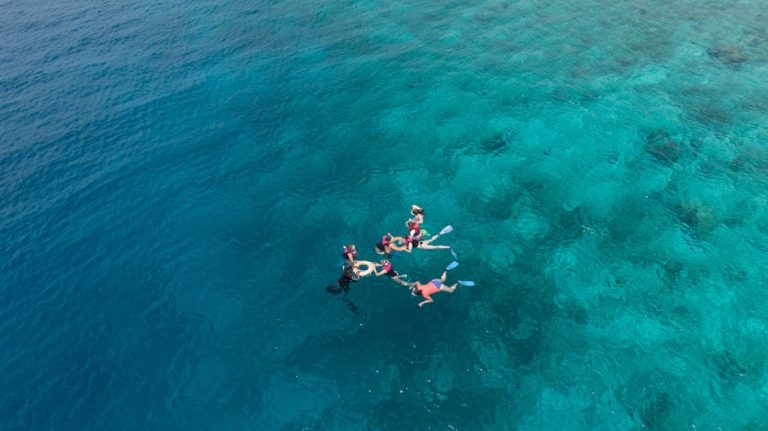
Most reef tours involve either snorkeling from the surface or diving to 40 to 60 feet, depending on your certification. Snorkeling is more accessible and less physically demanding, but it has real limitations. You’re looking down at the reef from above, and your perspective is compressed. Coral formations that seem dramatic from the surface look flatter and less detailed. Fish behavior is harder to observe because you’re moving across the reef quickly, and your shadow often spooks animals before you see them clearly.
Diving changes the experience fundamentally. You move more slowly, you’re at eye level with the reef, and you can observe fish behavior in real time. A parrotfish actually sounds like it’s grinding rock (because it is). Groupers have distinct personalities and will sometimes follow you around. You notice the architecture of the reef – how coral grows in layers, how fish use crevices for shelter. But diving also requires more physical effort, breath control, and mental focus. You’re managing air consumption, depth, time, and buoyancy while trying to enjoy the view. It’s not relaxing in the way snorkeling can be.
Marine Life: What You’ll Actually See
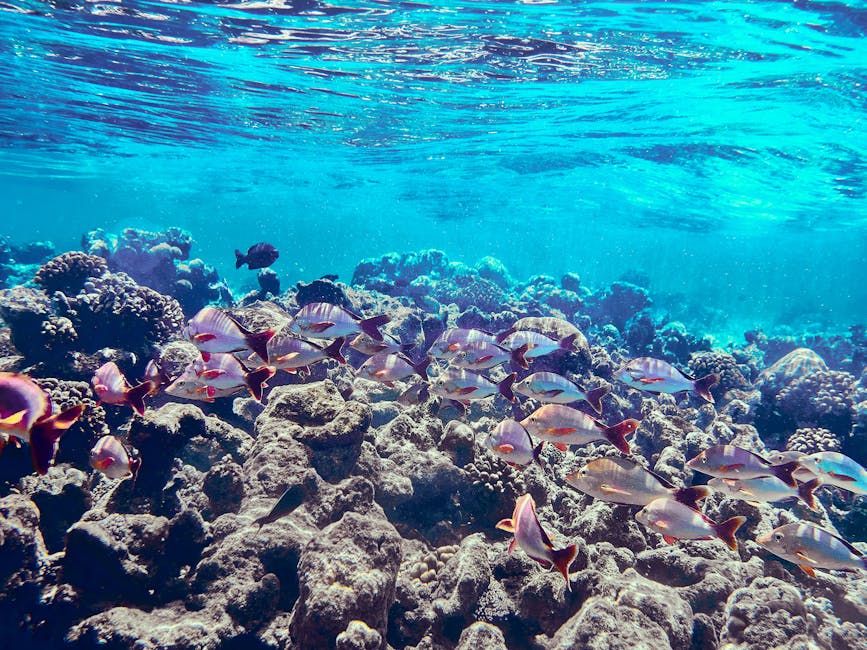
Reef ecosystems vary enormously by region, and the animals you encounter depend on location. Caribbean reefs are dominated by parrotfish, snappers, grunts, and the occasional sea turtle. The Red Sea has more diversity – lionfish, groupers, jacks, and sometimes larger pelagic species. Southeast Asian reefs (Thailand, Indonesia, Philippines) have incredible variety but also show visible damage from overfishing and climate stress. The Great Barrier Reef has scale and diversity that’s genuinely impressive, though many sections show bleaching damage.
Large animals – sharks, rays, sea turtles – are less common than most people expect. You might see a reef shark (usually a blacktip or whitetip) on maybe one in five dives, and they’re typically small and uninterested in humans. Sea turtles are memorable when they appear, but they’re not guaranteed. Rays are more common in certain locations and seasons. The real action on most reefs is with smaller fish – the schooling behavior, the feeding patterns, the territorial disputes between species. This is genuinely interesting if you’re paying attention, but it’s not the dramatic wildlife encounter that marketing suggests.
Coral health varies significantly by location and year. Some reefs are thriving; others show obvious bleaching, disease, or physical damage from storms or anchors. Healthy coral reefs feel alive in a way that degraded reefs don’t. The color is richer, the fish diversity is higher, and the overall structure feels complex. A bleached reef can still be interesting from a geological perspective, but it’s noticeably diminished. If you’re visiting a reef for the first time, you might not notice the difference, but if you’ve seen multiple reefs, the variation becomes obvious.
The Logistics of Group Tours
Most reef tours operate in groups of 10 to 30 people. This has practical implications. You’re sharing guide attention, competing for good viewing angles, and dealing with varying skill levels among other snorkelers and divers. Some people panic underwater. Others move too fast and scare fish away. A few will touch coral or chase animals. Guides manage this as best they can, but group dynamics affect the experience.
Smaller group tours (6 to 8 people) cost more but offer better conditions. You get more personalized attention, the guide can move at a sustainable pace, and there’s less disturbance to the reef. Private tours are even better if you’re diving, but they’re expensive and require advance booking. Most people end up on standard group tours, which are fine – just understand that you’re trading cost for a more intimate experience.
The boat ride itself matters more than you’d think. Some operators have fast speedboats that get you to the reef quickly; others use slower traditional boats. The journey can be 10 minutes or 45 minutes depending on where the reef is. Seasickness is real, especially if you’re prone to motion sickness or the water is rough. Taking medication before boarding is worth considering, even if you’ve never had issues before. The Caribbean and Southeast Asia have different water conditions, and what didn’t bother you in one place might in another.
Practical Realities
Physical fitness matters more than most people acknowledge. You need to be able to enter and exit the water, manage your gear, and handle yourself in current. Some reefs have strong currents that push you along; others are calm. A guide will assess conditions and adjust accordingly, but if you’re not comfortable swimming or you have mobility issues, certain reefs become difficult or impossible to access safely.
Sun exposure is intense. You’re on the water for hours, often without much shade. Reef-safe sunscreen is essential – regular sunscreen damages coral. Even with sunscreen, you’ll burn if you’re not careful. Rash guards and wetsuits provide better protection than you’d think, and they’re worth the minor discomfort in tropical heat.
The cost of reef tours varies wildly. Budget tours in Southeast Asia might run $20 to $40. Caribbean tours are typically $60 to $150. Premium operators in places like the Maldives or Fiji charge $200 to $400 or more. Price doesn’t always correlate with quality – some budget operators are excellent, and some expensive ones are mediocre. The difference often comes down to guide knowledge, boat condition, and group size rather than the price tag itself.
After a reef tour, you’ll likely feel tired. You’ve been in the sun, swimming or diving, managing unfamiliar equipment, and processing visual information constantly. It’s not exhausting in a strenuous way, but it’s mentally and physically demanding. Most people want to rest or eat afterward rather than immediately do something else. This is normal, and planning your schedule accordingly makes the experience more enjoyable.