Broome is a town that exists at the edge of several worlds simultaneously and has developed, over a century of multicultural history, a character that doesn’t quite resemble anywhere else in Australia.
At the end of the nineteenth century, Broome was the centre of the world’s pearl lugger industry — the town that produced the mother-of-pearl shell used in shirt buttons before the invention of plastic, staffed by Japanese, Malay, Filipino, Timorese, and Aboriginal divers who collectively built a multicultural history that the town wears openly in its architecture, its cemetery, its food, and its face. The pearl industry is still alive in Broome today, grown to saltwater pearl farming, and the aesthetic legacy of that history — the Chinatown precinct, the pearling heritage architecture on Dampier Terrace — gives the town a visual depth unusual for a place of 16,000 people at the edge of the Kimberley.
Add Cable Beach (one of the finest beaches in Australia), the extraordinary Kimberley light that photographers and painters have been chasing for decades, and a wildlife encounter calendar that would justify the trip on its own, and Broome’s standing as a destination independent of the Kimberley expeditions that use it as a gateway becomes clear.
Cable Beach
Cable Beach is 22 kilometres of cream-coloured sand on the Indian Ocean coast north of Broome, named for the undersea telegraph cable that came ashore here in 1889. It faces west, which means sunset. The camel trains at Cable Beach sunset are a tourist industry in themselves — they line up along the wave line in silhouette against the orange sky and appear in more travel photographs than any other single image from Western Australia.
The sunset camel ride is, I’ll admit, a pleasure I resisted for years on the grounds that it was too obviously a thing to do. I was wrong. The pace of a camel at walking speed in the shallow wash of the Indian Ocean, at the specific hour when the light turns the sand from cream to gold and the horizon absorbs the sun, is a pace entirely appropriate to the experience.
The beach itself, outside the organised sunset activity, is superb. The sand is firm and pale, the water clear enough for swimming (the Kimberley coast has saltwater crocodiles in some locations but Cable Beach is generally considered safe — check current advice at the local information centre), and the distance is long enough that you can walk for an hour and return without retracing your steps. At dawn, before anything is organised and before other people have arrived, Cable Beach is as empty and as beautiful as any beach in the country.
Roebuck Bay: Shorebirds and Marine Life
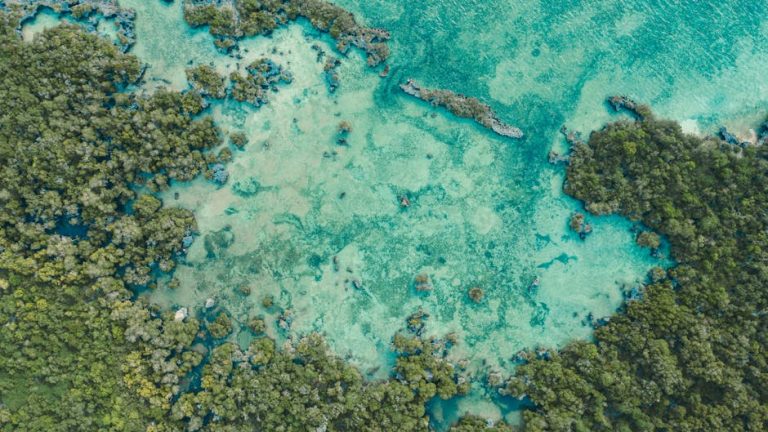
On the eastern side of the Broome peninsula, Roebuck Bay faces the Indian Ocean in a protected embayment with extraordinary tidal dynamics — the same extreme tidal range that characterises the broader Kimberley coast exposes vast mudflats in the bay at low tide, then floods them again with remarkable speed.
These mudflats are feeding habitat for one of the most significant shorebird assemblages in Australia. Roebuck Bay is a critical stopover on the East Asian–Australasian Flyway: the migration route used by hundreds of thousands of shorebirds moving between breeding grounds in Siberia and Alaska and non-breeding grounds in Australia. The bay’s invertebrate-rich mudflats provide the fuel loads that allow birds to make the next leg of their journey. Birders from across Australia and internationally visit Broome specifically to see the tidal roost at Roebuck Bay, where tens of thousands of birds — red knots, bar-tailed godwits, great knots, various sandpipers — congregate at high tide.
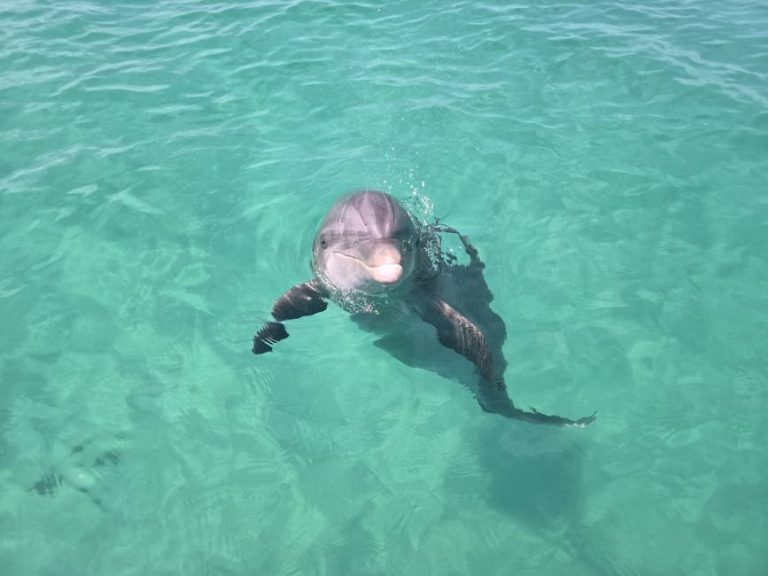
The snubfin dolphin (Orcaella heinsohni), a short-beaked, rounded species endemic to northern Australian and southern New Guinean waters, is resident in Roebuck Bay and reliably encountered on guided boat tours. It is one of the world’s rarest dolphin species and is not commonly seen outside a handful of locations in northern Australia.
The Kimberley as a Gateway
Broome is the southern gateway to the Kimberley expedition cruises described elsewhere — the small-ship vessels depart from here and return here after 12–18 day coastal itineraries. But Broome is also the access point for a land-based Kimberley experience that deserves mention separately.
The Gibb River Road — 660 kilometres of unsealed road connecting Broome to Kununurra through the heart of the Kimberley — is one of Australia’s great 4WD routes. Open from May to October during the dry season, it passes through gorge country, Aboriginal pastoral stations, and the Mitchell Plateau, with access to Mitchell Falls (one of Australia’s most spectacular, reached by a 9km return walk from the road’s end) and the ancient Wandjina rock art country of the Wunambal Gaambera people.
For travellers with a capable 4WD, two to three weeks, and the appropriate permits for Aboriginal land crossing, the Gibb River Road is an experience in its own right and not simply a route to somewhere else.
Staircase to the Moon
From March to October, on the three nights around full moon each month, the moon rises over the exposed mudflats of Roebuck Bay from Town Beach in Broome and its reflection produces the optical illusion of a staircase of light running across the rippled mud to the horizon. The phenomenon lasts about forty minutes and is, in person, as atmospheric as its reputation suggests.
The Staircase markets — markets held at Town Beach on the same nights — produce a social gathering around the phenomenon that has become part of Broome’s community calendar. Food stalls, local produce, the specific pleasure of sharing an unusual natural spectacle with a mixed crowd of locals and visitors.
The dates are published well in advance by the Broome Visitors Centre. Plan around them if your timing allows.
Getting There
Qantas, Virgin Australia, and Jetstar serve Broome from Perth (approximately two hours), and there are some east coast connections through Perth. The town is better connected than its remoteness suggests — it handles significant tourism infrastructure with reasonable efficiency.
Stay at least three nights minimum; five is better. Two days for the beaches and town, one for a Roebuck Bay tour, and one for an outlying excursion — the Horizontal Falls day trip by seaplane being the most spectacular option if the Kimberley cruise itself isn’t part of your itinerary.
Broome rewards slow attention. It’s a town that makes more sense the longer you’re in it.