I have a photograph from my first Whitsundays sailing trip that I’ve never managed to adequately explain to people who weren’t there. It was taken at anchor in a bay on the south coast of Hook Island, on the third evening of a five-day bareboat charter. The light was the particular gold of late afternoon in the tropics. The boat’s bow was pointing toward a beach of pale sand backed by dark green forest. The water between us and the beach was clear enough to show the sand and coral beneath it in vivid detail. There were no other boats in the bay. There was no one on the beach.
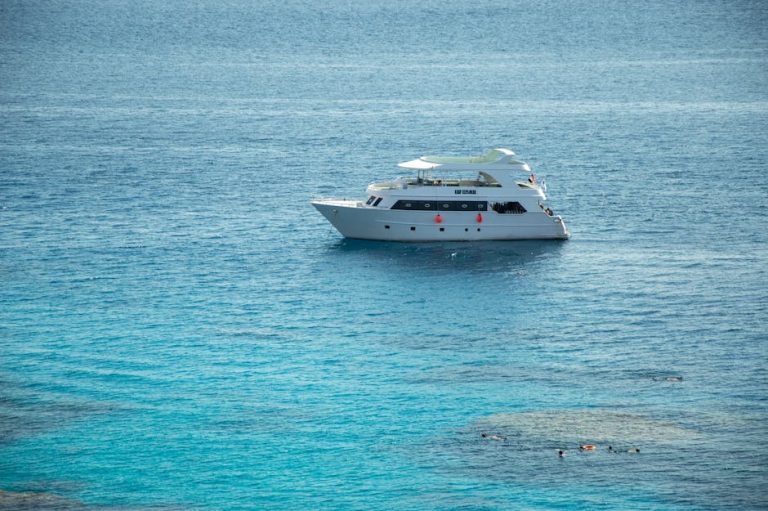
The photograph shows a sailing yacht at anchor in what appears to be a deserted tropical paradise. That is exactly what it was.
The Whitsundays does this. You find bays that feel completely private. You sail between islands in morning light when the water is flat and the anchorages are empty. You stop wherever you want. This is what sailing gives you that no resort can: the freedom to choose where you are.
How Bareboat Chartering Works
A bareboat charter is a yacht rental without a skipper. You take the boat, you’re responsible for it, and you take it where you choose within the operator’s designated sailing area — in the Whitsundays, this is the island group itself plus the surrounding waters out to Bait Reef.
No Australian maritime licence is required for bareboat charter in the Whitsundays, though operators assess your sailing experience before handing over the keys. You’ll be asked about your previous sailing background — hours on the water, boat types you’ve sailed, any formal qualifications — and the operator’s decision about whether to charter to you is based on this. If you have limited experience, most operators offer a short practical assessment and can pair you with a local skipper for the first day.
The check-in process is comprehensive: the operator walks you through the boat’s systems (engine, navigation instruments, safety equipment, dinghy), reviews the charts and the designated area, briefs you on specific hazards (shoal water around certain islands, restricted zones), and sends you off.
The boats range from 28-foot monohulls (tight for more than two people, perfect for couples) to 48-foot catamarans (comfortable for six to eight, stable, good for families). Catamarans are the more popular choice for larger groups: the dual-hull stability means less rolling at anchor, there’s more deck space, and the cabin layout on a catamaran typically gives each couple or small group their own hull.
The Islands Worth Anchoring At
The choice of anchorage shapes your Whitsundays experience fundamentally. The most popular bays — Cid Harbour on Whitsunday Island, the waters off Whitehaven Beach — can be crowded with charter vessels in peak season. The less obvious choices are usually better.
Blue Pearl Bay, Hook Island. I’ve mentioned this elsewhere and I’ll mention it again because it consistently delivers: sheltered from the southeast trade winds, excellent snorkelling directly from the boat, and in my experience reliably quieter than the more famous anchorages. Anchor in four to five metres of water, snorkel to the northern reef edge, and spend the afternoon on the boat watching fish from the bow.
Butterfly Bay, Hook Island. On Hook Island’s northern coast, this bay has a small fringing reef that produces reliable coral and fish sightings and is close enough to Hook Passage to make an easy morning sail toward Hayman Island or the outer reef. Reasonably sheltered from the north. Can be crowded in peak season but empties by evening.
Nara Inlet, Hook Island. One of the most sheltered anchorages in the Whitsundays — a deep, steep-sided inlet on Hook Island’s south coast that provides protection in almost any wind direction. The inlet walls are forested and dramatic. There are Aboriginal rock paintings in a cave at the inlet head, accessible by dinghy. The snorkelling in the inlet is limited but the anchorage quality is exceptional.
Stonehaven Anchorage, Hook Island. A small, calm bay on Hook Island’s northeast tip, accessible only from the east to avoid the shoal, with good depth and room for perhaps four or five boats. Some of the finest snorkelling in the island group is accessible from this anchorage. Mostly overlooked by mainstream charter traffic.
Langford Island Spit. The exposed sand spit at Langford’s eastern end is accessible in the right conditions (southeast winds make the anchorage comfortable) and provides a combination of beach landing and good reef snorkelling on the spit’s southern face. It looks, from the water, like the definition of a tropical island.
Provisioning and Daily Life
Provisioning a sailing charter in the Whitsundays is done at Airlie Beach before departure. The main supermarket is a ten-minute walk from the marina and stocks everything you need. Most boats have a reasonable galley — stove, oven, refrigeration, plenty of storage — and cooking on board is straightforward.
The daily rhythm of a Whitsundays charter is approximately: breakfast at anchor, sail to the next bay in the mid-morning when the trade wind builds, snorkel or explore in the early afternoon, anchor and swim in the late afternoon, cook dinner on board or occasionally at a restaurant at Airlie Beach (if you’ve returned to the marina for the night), watch the stars from the deck.
This rhythm is more sustainable than it sounds. Five days of it doesn’t produce the restlessness that five days at a beach resort might. The movement — each day a different bay, a different view — prevents the stasis that turns holidays flat.
Skippered and Guided Alternatives
For sailors who want the Whitsundays experience without the responsibility of handling the vessel, skippered charter operators provide a professional skipper who sails the boat while you enjoy the trip as a passenger. Most skippered charters take four to eight guests and run three to seven day itineraries.
The larger guided sailing catamaran operations — vessels taking twelve to thirty guests on structured three-night itineraries — are the budget entry point to Whitsundays sailing. The boats are larger, the experience more social, and the itinerary fixed (typically Whitehaven Beach and Hill Inlet as the centrepiece). For first-time Whitsundays visitors who want the sailing atmosphere without planning commitment, these trips are well-established and reliably enjoyable.
Whitehaven Beach: The Obligatory Stop
Every Whitsundays sailing trip includes Whitehaven Beach. This is not a tourist board requirement — it’s a matter of simple logic. Whitehaven is nine kilometres of 98% silica sand on Whitsunday Island’s east coast, and the walk from Hill Inlet lookout — twenty minutes up a track from the beach — gives you a view of the inlet’s tidal sand patterns that is one of the most visually extraordinary things in Queensland.
It will be crowded during the day, when the day-trip catamarans from Airlie Beach are in. Arrive early — before 9am — or late — after 4pm when they’ve departed. The beach in the early morning, with the hard ridges of previous-tide sand still visible and no footprints from the day, looks like something designed for a film rather than real.
Sail to it. Anchor offshore if the main beach area is busy. Walk north toward the inlet. Let the day-trip boats do what they’re doing. You have a boat. You can wait.