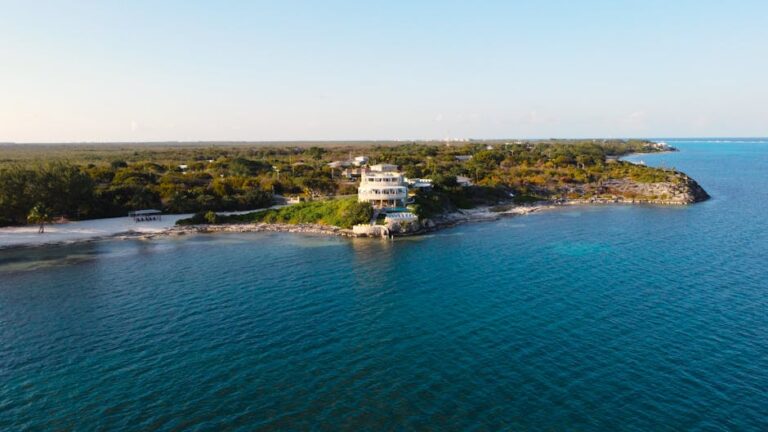
Lord Howe Island is the sort of place that makes you reconsider everything you thought you knew about island destinations. I arrived expecting good snorkelling and ended up rethinking my entire understanding of what a pristine ocean environment looks like.
The island is 600 kilometres off the New South Wales coast, two hours by plane from Sydney, and it receives fewer than 400 visitors at any given time — a cap enforced by law and the capacity of the island’s accommodation. It is, by several measures, the most tightly regulated tourist destination in Australia. It is also, by my assessment, one of the finest.
The Island
Lord Howe Island is a crescent-shaped volcanic island, the remnant of a shield volcano that erupted from the seafloor approximately seven million years ago. At its southern end, two peaks — Mount Gower (875 metres) and Mount Lidgbird (777 metres) — rise almost vertically from the ocean in a profile that is genuinely dramatic even by the standards of volcanic island landscapes. The lagoon between the island and its barrier reef on the western side is sheltered, warm, and extraordinarily clear.
The island has permanent residents — approximately 350 people — who have built an economy around sustainable tourism and agriculture that predates the word “sustainable” by several generations. Most of the island’s 1,455 hectares are designated World Heritage wilderness, and the permanent human footprint is small. The roads are unsealed. The most common modes of transport are bicycle and foot. There are no traffic lights.
The 400-visitor cap has existed since 1981 and is genuinely enforced. Accommodation is limited to a fixed number of beds, and peak season (September through April) sells out well in advance.
The Marine Environment
The waters around Lord Howe Island sit at the convergence of tropical and temperate ocean systems — the southward-flowing East Australian Current brings warm water from the tropics, and the island sits at the southern limit of coral reef formation in the Pacific. The result is an unusual ecology: tropical reef species coexisting with temperate fish and invertebrate communities in a zone that scientists call subtropical.
The coral reef in the lagoon is the most southerly coral reef in the world. It is not a Great Barrier Reef-scale structure — the lagoon reef is relatively simple compared to the GBR’s vast complexity — but it is intact, healthy, and spectacularly clear. Visibility in the lagoon is routinely 30 metres or more.
The marine fish community is a hybrid: familiar reef fish species that you’d see on the GBR, alongside fish normally associated with temperate NSW waters, alongside species found nowhere else in the world. Lord Howe Island has a high rate of marine endemism — species found only here — because of its isolation. The doubleheader wrasse, the Lord Howe butterflyfish, and the ball’s pyramid cleaner shrimp are among the many species whose global range consists, essentially, of these few square kilometres of ocean.
The Ball’s Pyramid Kermadec Experience
Twenty kilometres southeast of Lord Howe Island, Ball’s Pyramid rises 562 metres from the ocean surface — the world’s tallest sea stack, a sheer volcanic pinnacle that drops vertically into deep water on all sides. Diving its walls is not a regular commercial activity, but research and occasional specialist dive operations visit it, and the marine life on the underwater sections of the stack — completely undisturbed by recreational diving — is, by accounts from those who have dived it, exceptional.
For most visitors, Ball’s Pyramid is a visual experience rather than a diving one: the boat trip from Lord Howe passes close enough to see the sheer walls clearly, and the experience of a 562-metre rock spire rising from open ocean in isolation is powerful enough on its own terms.
Snorkelling: Ned’s Beach and the Lagoon
The most accessible marine life experience at Lord Howe is the fish feeding at Ned’s Beach, on the island’s eastern shore. This is not a commercial operation — it’s an organic tradition that developed over decades as the local fish population learned to associate the beach with food. In the late afternoon, a guide or local resident enters the water with a container of bread and fish food, and the fish arrive in the kind of numbers that I had previously only seen in wildlife documentaries.
Enormous kingfish, trevally, and Maori wrasse cluster in the shallows. Smaller reef fish fill the middle water. A large spotted eagle ray, resident at the beach for years, moves through the group in the characteristic unhurried way of animals that regard humans as an occasional inconvenience. You stand thigh-deep and fish push past your legs.
It is not subtle. It is also completely wonderful.
The lagoon snorkelling, accessed from the western shore, is calmer and more focused on coral and reef fish in a more natural setting. The coral coverage in the Lord Howe lagoon is in genuinely excellent condition — untouched by the bleaching events that have affected the GBR, because the water temperature here is cooler and the reef system less vulnerable to the thermal stress that drives bleaching in the tropics.
Getting There and Staying
Qantas and Eastern Australia Airlines fly to Lord Howe from Sydney (approximately 2 hours) and Brisbane. Flights are limited — usually two or three per day maximum — and in peak season they fill well in advance. Book at least three months ahead for any trip between September and April.
Accommodation options range from self-catering apartments and cottages to small lodge-style guesthouses. There is no large resort on Lord Howe — the island’s ethos is fundamentally against that model — and the accommodation accordingly has a domestic, unhurried character that suits the island’s pace.
The island works best at walking speed. Hire a bicycle for getting around (mandatory, essentially — most accommodation comes with one included), walk the Mount Gower summit track on a guided day hike if fitness allows, and spend your water time in the lagoon and at Ned’s Beach.
Lord Howe Island is not a reef destination in the conventional GBR sense. It is something rarer: a functioning island ecosystem, at carrying capacity, managed for permanence rather than growth. The ocean around it is part of that system. Treat it accordingly.