The Cod Hole has a reputation that precedes it by decades, and in my experience, it earns every bit of that reputation on every single dive.
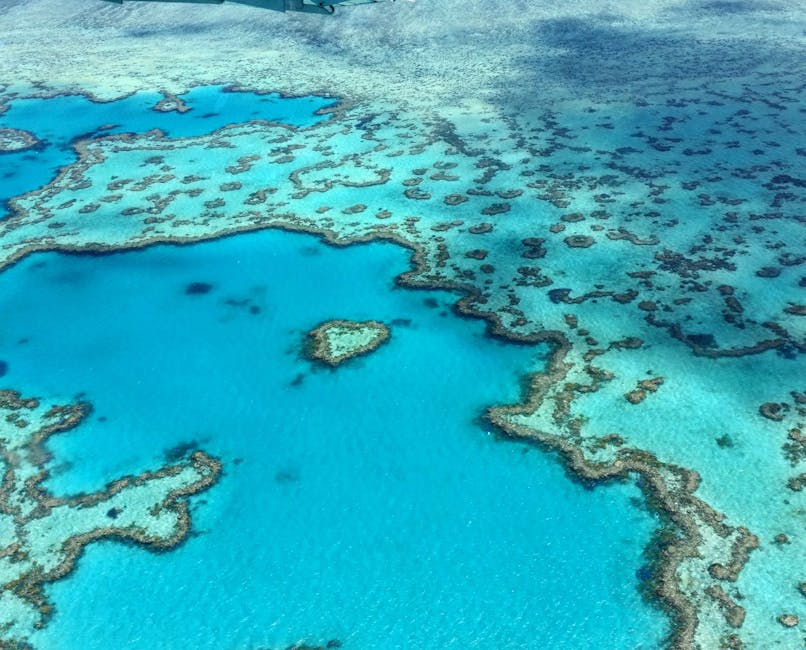
The site is a section of Ribbon Reef No. 10, the northernmost of the ten ribbon reefs that form a broken line along the outer edge of the Great Barrier Reef between Cooktown and Cape York. It was named for its resident population of potato cod (Epinephelus tukula) — enormous, spectacularly ugly, endlessly personable grouper that approach divers with the confidence of animals that have absolutely nothing to fear.
The largest potato cod at the Cod Hole is approximately 1.8 metres long and weighs what I estimate to be around 100 kilograms. It has a face that could generously be described as expressive. It came within half a metre of my camera on my last dive there, examined the lens with the casual interest of something that has been examined by thousands of cameras and remains fundamentally unimpressed by all of them, and then swam slowly away to investigate a diver who was apparently more interesting.
I have been photographed with it, if you can call it that. More accurately: it graciously allowed itself to be photographed, and I happened to be in the frame.
The Ribbon Reefs
The ribbon reefs are ten elongated, narrow reef structures that run roughly north-south along the continental shelf edge northeast of Cape York. They’re separated from each other by passages — ship channels — that allow water to circulate between the Coral Sea and the GBR lagoon and that, during the right tidal conditions, produce excellent drift diving.
The ribbon reefs are accessible from Cooktown (the closest mainland access point), Port Douglas (a longer run), or Cairns (requiring a full day of travel each way, making them essentially a liveaboard destination from there). Most serious divers access them on liveaboards operating from Cairns or Port Douglas, on itineraries that combine ribbon reef sites with Cod Hole and sometimes with Coral Sea destinations.
The northern ribbons — Numbers 9 and 10 — have the best diving: cleaner oceanic water from the Coral Sea, less accumulated terrestrial runoff influence, and the density of marine life that characterises the far northern GBR generally. Visibility is often 25 to 35 metres. The outer walls of the ribbon reefs drop to significant depth and in places are covered in soft coral communities that rival the Coral Sea atolls.
Cod Hole: What Happens There
The actual diving at Cod Hole involves descending to a sandy area at approximately 18 to 22 metres, surrounded by the reef structure, and waiting for the potato cod to arrive. They always arrive. There are approximately eight to twelve resident individuals, varying in size from large to enormous, and they have been associating with divers at this site since the 1970s.
The interaction is entirely on the fish’s terms. They approach, they investigate, they accept the presence of divers in their territory with a benign authority that makes you feel, somehow, like the tolerated guest rather than the observer. They move around you, over you, and occasionally through the group of divers in ways that require everyone to shift position. They are in no hurry.
When operators run fish feeding at the Cod Hole — which is common, though not universal, practice — the potato cod’s behaviour intensifies considerably. They cluster, they posture against each other, they follow the fish-holder in tight formation. The spectacle is compelling but also somewhat changes the nature of the encounter. My preference is dives without feeding, when the cod are simply present on their own terms and the interaction feels more genuine.
Beyond the potato cod, the Cod Hole has a resident population of Maori wrasse, a cleaning station that operates almost continuously, sharks — usually whitetips and grey reefs — in the water throughout the dive, and the ambient fish diversity of the northern ribbon reef environment.
Steve’s Bommie
Steve’s Bommie, on Ribbon Reef No. 3, is the other ribbon reef site that divers reliably cite as a career highlight. It’s a large coral pinnacle rising from sandy bottom at 28 metres to within three metres of the surface, completely encrusted with soft coral in such density that the structure of the pinnacle is barely visible beneath the growth.
The name comes from Steve Domm, a diving pioneer who ran early expeditions to the ribbon reefs. The bommie has been photographed on tens of thousands of dives, and images from across decades show the soft coral coverage changing and shifting — different species dominating in different conditions — but the sheer density of invertebrate growth remaining consistently extraordinary.
A dive on Steve’s Bommie, when current conditions are right and the soft corals are fully extended in the flow, is one of the most visually overwhelming dives I know. The colour saturation — orange, red, pink, white, purple — against the deep blue of the surrounding water is something that photographs don’t fully capture. You need to be there, watching it move in the current, to understand what soft coral habitat at full health looks like.
Timing and Conditions
The best time to dive the ribbon reefs is June through October, when the southeast trade winds produce calm conditions on the reef’s eastern (ocean-facing) side and visibility is at its annual best. During this season, the reef is also at its most productive for macro life: the reduced runoff from the Queensland catchments in the dry season improves water clarity throughout the system.
November through March — the wet season — brings the risk of cyclonic weather, reduced visibility from increased runoff, and less predictable conditions generally. Some liveaboard operators continue running ribbon reef trips through the wet season in years when cyclone activity is low; others focus on other destinations.
The passage diving between the ribbon reefs and the mainland GBR is best during tidal exchanges — specific periods of strong current flow through the channels. Your liveaboard operator will time dives to align with the most productive tidal windows.
Getting There
The ribbon reefs are not accessible on a day trip from Cairns. The journey north from Cairns to Ribbon Reef No. 10 takes most of a day of travel even at a fast boat speed. The practical options are liveaboard vessels operating four-to-seven-day itineraries from Cairns or Port Douglas, or basing yourself in Cooktown and using local operators for day trips to the southern ribbon reefs.
For most divers, the liveaboard is the right choice — it gives you multiple days of diving across multiple ribbon reef sites, including the Cod Hole, with the kind of repeated access that lets you build up a genuine picture of this section of reef.
Go before the cod recognise your face and become indifferent to you. Though honestly — their indifference is most of the charm.