Stand-up paddleboarding arrived in reef tourism at roughly the right moment. The technology existed, the reef was becoming more accessible to non-diving visitors, and people were looking for ways to engage with the water that were slower and more observational than snorkelling and didn’t require the certification and equipment commitment of diving.
The argument for SUP as a reef access method is similar to the argument for kayaking: you’re on the water rather than in a vessel above it, you’re quiet, and you’re moving at a pace that allows you to look down and see what’s below you. The additional argument specific to stand-up paddling is the vantage point. From a standing position on a paddleboard, with your eyes two metres or more above the water surface, you can see significantly further into the water column than from a sitting kayak. In good visibility, you can see the reef in three to five metres of water from a standing position with a clarity that allows real observation.
What You Can Actually See From a Board
The answer depends on the site, the conditions, and the time of day, but the consistent categories:
Turtles. Green and loggerhead turtles surface to breathe at regular intervals — typically every five to fifteen minutes — and are visible both at the surface and below it in shallow water. From a standing paddleboard, the shadow of a turtle two metres below the surface is visible from surprisingly far away; the pattern recognition that comes with time on the water means experienced paddlers spot turtles below the surface before they surface to breathe. At Lady Elliot, at the Low Isles, at Heron Island lagoon — anywhere turtles aggregate — paddleboarding is the most effective surface method for finding them.
Rays. Eagle rays, cowtail rays, and the occasional manta ray passing through shallow water are visible from the standing position in good visibility. The distinctive wing-shape below the surface, once seen, is immediately recognisable on subsequent encounters. A large cowtail ray resting on a white sand flat is visible from twenty or thirty metres at standing height on a calm morning.
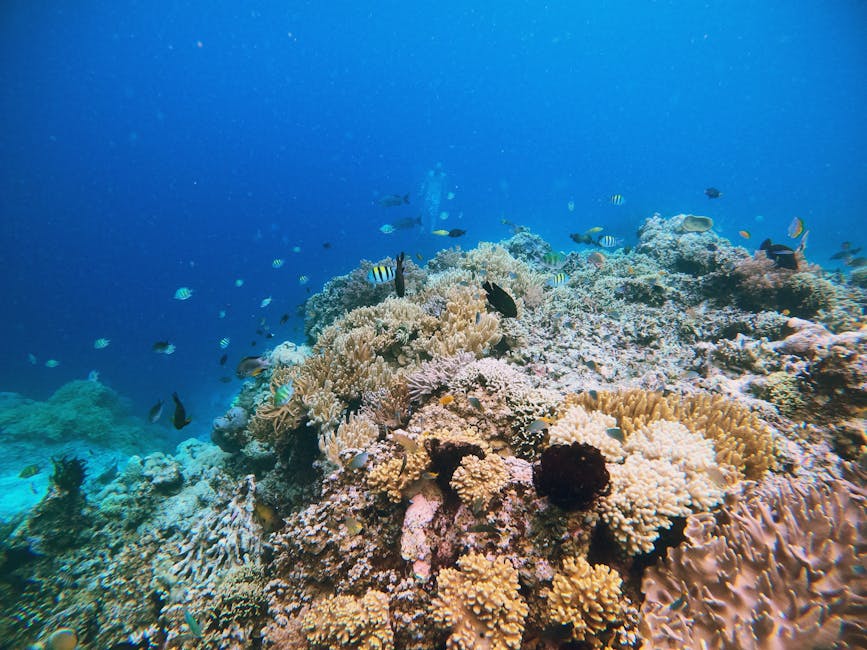
Reef topography. The colour gradient reading that experienced paddlers develop — the shift from pale blue-white of sand, to the dark irregular pattern of coral, to the deep blue of open water beyond the reef edge — allows paddlers to navigate the reef by sight rather than by chart in shallow water. This is useful knowledge and it develops quickly with time on the water.
Sharks. Reef sharks in shallow water cast a shadow that is visible from above long before the animal itself is distinguishable. This is occasionally alarming to new paddlers and becomes, with experience, simply information. Reef whitetip and blacktip reef sharks are regularly seen in the shallows of GBR cay lagoons. They are not interested in paddleboarders.
Technique Basics
Stand-up paddleboarding is more accessible than it appears for first-timers, and the learning curve on flat water is rapid. The basics:
Start on your knees on the board, in calm water, and get comfortable with the balance before standing. The board is more stable than it looks; the instability new paddlers experience is mostly in the brain rather than the body.
Stand with feet parallel to the board’s centreline, roughly shoulder-width apart, weight evenly distributed, knees slightly bent. This is the position you return to constantly — straight legs create instability, bent knees absorb movement.
The paddle: the blade faces away from you on the stroke (the bent side of the blade toward you looks counterintuitive and is wrong). The top hand pushes forward while the bottom hand pulls back on the stroke. Keep the paddle as vertical as possible relative to the water — a vertical stroke is efficient; a horizontal one is not.
Turning: drag the paddle at the side you want to turn toward, or take a series of wide strokes on the opposite side. The board will turn toward the dragging side.
The fall: you will fall in. This is inevitable, expected, and completely fine. Fall away from the board rather than onto it to avoid contact with the hard surface. The leash attached to your ankle ensures the board doesn’t drift away.
Sites in Queensland
The Cairns region has several operators offering guided SUP tours in sheltered reef lagoons, primarily around Green Island and the nearby reef areas accessible on day-trip vessels. These are the appropriate entry-level experience: calm water, supervised, with marine life access that rewards the standing position.
The Whitsundays offer paddleboarding in the sheltered bays of the national park islands — the same calm, clear water that makes them good for kayaking. Hamilton Island has rental boards; sailing charter guests often carry boards as part of the vessel’s equipment.
The Ningaloo Reef lagoon is one of the finest SUP environments in Australia for wildlife encounters: calm water (the lagoon inside the fringing reef is protected from the Indian Ocean swell), high water clarity, and the dugong and turtle populations that make every slow pass over the seagrass beds a potential encounter.
Safety Considerations
The safety issues specific to SUP on reef are: getting blown offshore if wind builds while you’re on the water (use a leash, stay in sheltered areas, check conditions before going out), and the possibility of reef contact if you fall in shallow areas (know where the coral is before you paddle over it, avoid shallow reef sections in chop). The leash is non-negotiable — a paddleboard in open water without a leash can reach a vessel-threatening drift speed in moderate wind.
Marine stingers — the box jellyfish and Irukandji that make swimming dangerous in the tropics from October through May — are a consideration for the whole-body immersion that falling off your board involves. In stinger season, a full-body stinger suit is appropriate for SUP in tropical waters, or confine paddling to enclosed lagoons where stinger nets are maintained.
The paddleboard season in Far North Queensland is year-round, but the best conditions are May through October when the trade wind is manageable in the mornings and the water is calm.
Get on a board. Stand up. Look down. The reef is right there.