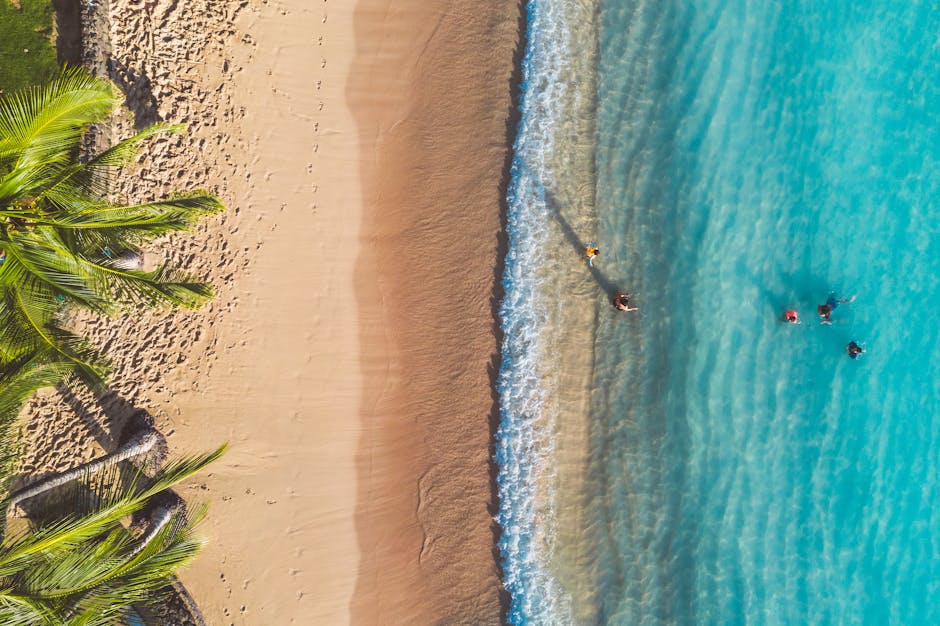
I’ll be upfront about something: I’m constitutionally suspicious of things that have been specifically marketed as romantic. Heart Reef existed before it became a tourism symbol – it’s a naturally occurring coral formation in the Whitsunday passage that happens to have grown in the shape of a heart, roughly 20 metres across, sitting in vivid turquoise water on a shallow reef plateau. The aerial view is genuinely extraordinary. The fact that every proposal in Queensland’s tourism marketing seems to happen above it doesn’t change what it actually is.
What it actually is, is one of the most visually arresting sights in Australian aviation.
How the Flight Works
Scenic flights over Heart Reef depart from Airlie Beach, the gateway town to the Whitsundays on the Queensland coast. Flights are available in two formats – small fixed-wing aircraft and helicopters – and the experience differs meaningfully between them.
Fixed-wing flights are longer, covering more of the Whitsunday Islands and often including a full circuit of the outer reef as well as Heart Reef. They run between 60 and 90 minutes and offer window seats with unobstructed views. The aerial perspective on the Whitsundays from a fixed-wing aircraft is remarkable – the islands appear as dark green jewels scattered across water that runs from aquamarine to deep sapphire depending on depth.
Helicopter flights are shorter – typically 60 to 75 minutes – but the experience is more immediate. Helicopters can hover, circle, descend. The glass-bubble configuration means virtually everyone gets an unobstructed view simultaneously. When you pass over Heart Reef in a helicopter and the pilot banks slightly to give you the full view, the geometry of that coral formation against the surrounding reef is something that stays with you.
What You See on the Way
Heart Reef is the headline, but the flight is really a tour of the entire Whitsunday Island Group from the air, and that context matters enormously. The 74 islands of the Whitsundays look nothing from the ground like they look from 2,000 feet. The fringing reefs around each island are visible as pale halos. Whitehaven Beach – itself one of the most photographed beaches in Australia – appears as a stroke of white so bright it seems almost artificial. Hill Inlet, where the tidal flow of silica sand creates patterns that shift daily, looks from the air like an abstract painting in cream and aquamarine.
By the time you reach Heart Reef, you’ve already had 30 minutes of views that would justify the flight on their own. The reef formation is the punctuation mark at the end of a sentence that’s been building since takeoff.
The Photography Reality
Aerial photography from moving aircraft is harder than it looks. The window glass on fixed-wing planes can introduce glare and reflection; the vibration makes longer exposures impossible. Use the highest shutter speed your camera allows, shoot through the widest angle you have, and accept that some shots will be soft. Smartphones actually perform surprisingly well for this kind of photography because their computational processing compensates for vibration better than traditional cameras.
On helicopters, you can often open the window slightly or have a door-off configuration for serious photographers. Ask at booking if this matters to you.
Choosing Your Flight
The flight duration and aircraft type are the main variables. If you want maximum island coverage and the most time in the air, fixed-wing is the better value. If you want the most intense visual experience of Heart Reef specifically, helicopter. Both are expensive by any measure – this is not a budget activity – but both deliver something that cannot be accessed any other way. Heart Reef is a protected marine area. You cannot land near it, snorkel above it, or approach it by boat. The only way to see it is from the air.
Morning flights tend to offer better light conditions and calmer air. The Whitsundays can develop afternoon convection as the day heats up, and turbulence over the islands in late afternoon is common. Book early in the day if you can. The heart will look better in morning light anyway.