There is a version of reef engagement that requires no fins, no mask, no certification, and no boat. It requires only a low tide, appropriate footwear, and the willingness to look carefully at a metre of water.
Reef walking — exploring the exposed reef flat and tidal pools at low tide — is the most accessible form of reef experience available, and it’s also the one most thoroughly ignored by the tourism industry, which has obvious commercial reasons to direct visitors toward the activities that require bookings. Nobody makes money from you walking the reef flat alone at low tide. The reef, however, has no financial interest in the question, and the tidal flat at low water is as rich an environment as any reef you’ll dive.
What Happens at Low Tide
A coral reef flat at low tide is a temporarily aerial environment — the organisms that live there are exposed to conditions (sunlight, air temperature, desiccation) that they never encounter at high water. They’ve evolved accordingly: the animals of the reef flat are specialists in surviving exposure.
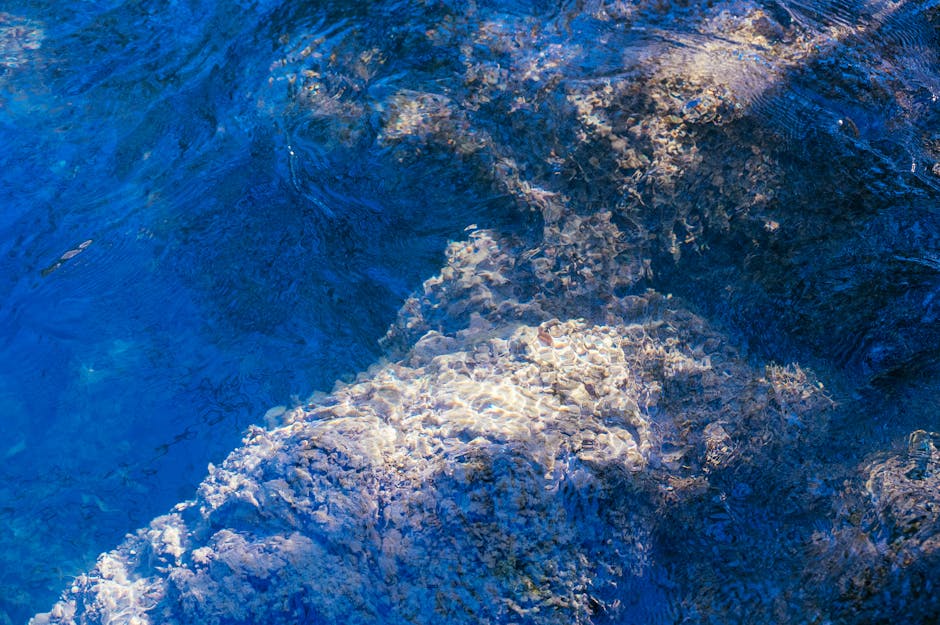
What’s visible at low tide that’s invisible at high water: the architecture of the reef. The branching and plating and massive coral formations that, covered by water, are obscured by surface reflections and the blue cast of the water column, are visible in full structural detail at low tide. The colour is muted — corals retract their polyps in air and their tissues pale — but the shapes are extraordinary. A field of Acropora table corals at low tide, viewed from above with their layers visible in cross-section, is one of the strangest and most beautiful things the reef offers.
The tidal pools left in depressions in the reef flat as the tide recedes are, for ecology, what rock pools are on temperate coastlines but significantly richer. Each pool is a microcosm — the water maintained at temperature by the same sun that threatens to dry the surrounding flat, populated by fish, crabs, sea urchins, sea cucumbers, brittle stars, and the small invertebrates that shelter in the coral fragments. Looking into a tidal pool on a coral reef flat is looking into a compressed version of the reef below: the same species, the same ecological relationships, in a volume of water that fits in a bathtub.
Where to Walk
The reef flat environments most accessible for walking are at the coral cay islands of the GBR — Lady Musgrave, Heron, Lady Elliot, One Tree — where the flat extends around the island and is accessible directly from the beach.
Heron Island has the finest walkable reef flat I know in the southern GBR. The flat extends to the north and east of the island and at low spring tides exposes a broad platform of varied coral communities: staghorn gardens, massive Porites domes that have been growing in the same position for decades, the sand flats between coral patches where sea cucumbers work the sediment and the occasional flounder sits camouflaged on the sand surface. The naturalist staff at Heron Island run guided reef walks at low tide that are among the best interpretive experiences in Australian reef tourism.
Lady Elliot Island reef flat walks are less formally structured but equally rewarding. The flat on the island’s western and northern sides exposes at low water in conditions that allow exploration of a few hundred metres of reef in calm air.
The Whitsunday Island fringing reef flats, accessible by kayak to the beach and then on foot, are more variable in quality — the fringing reefs around the continental islands are affected by the sediment dynamics of the inner shelf — but produce tidal pools with interesting invertebrate communities and the specific experience of walking on a reef flat with a forested island hill rising behind you and the Coral Sea ahead.
How to Walk Without Causing Damage
The reef flat is a living surface and foot contact causes damage. The organisms of the intertidal zone are adapted to wave wash and tidal variation, not to the focused point-pressure of a human foot on their tissue.
The rule is simple and requires constant active application: step only on dead coral rubble, bare sand, or rock. Never step on live coral — the tissue crush from a single step kills the coral beneath your foot immediately. Never step on sea urchins, which are present throughout the flat and whose spines break off in skin and work inward. Never step on the sandy patches between coral heads without checking what’s there first — the camouflage of stonefish and flatfish is specifically evolved to defeat exactly this kind of casual scanning.
Walking pace is slower on a reef flat than anywhere. This is appropriate. The reef flat rewards slowness in every way: the animals are more visible, the damage is less, and the specific quality of attention that comes from moving carefully through a complex living surface is more rewarding than any other pace.
Footwear: reef shoes or old running shoes with closed toes. Bare feet on the reef flat expose you to urchin spines, coral cuts (which are prone to infection from the marine bacteria on the coral surface), and the stonefish (Synanceia verrucosa) — the world’s most venomous fish, which rests motionless on rubble and sand and is essentially impossible to see until it’s too late. Stonefish envenomation through a barefoot step is genuinely dangerous and genuinely painful. Closed-toe footwear is not optional on a reef flat.
Tidal Pool Naturalism
Tidal pools on coral reef flats reward the same slow attention that the flat itself does, but at a smaller scale and with the advantage of containment — the animals aren’t going anywhere while you’re watching.
The categories worth looking for in every tidal pool:
Fish. Small reef fish — gobies, blennies, damselfish — shelter in coral rubble at the pool edges. The gobies are particularly worth attention: often under two centimetres long, often transparent or cryptically coloured, often resting on a specific substrate that they match precisely. The mudskipper — a fish capable of breathing air and walking on its fins — occurs in the mangrove-adjacent reef flats of northern Queensland and is among the odder animals available to casual observation anywhere.
Echinoderms. Sea urchins (both the spiny Diadema urchins that you avoid stepping on and the smaller, rounder forms that are less hazardous), sea cucumbers in several species, and brittle stars that extend their arms from under coral rubble fragments. The brittle star is worth specifically seeking out: lift a flat piece of dead coral rubble (gently, replace it carefully in its original orientation) and you may find five or six brittle stars beneath it, moving with a fluid lateral locomotion that looks more like liquid than animals.
Crustaceans. Hermit crabs using gastropod shells as mobile housing, small reef crabs under rubble, and the occasional mantis shrimp in a burrow at the pool’s sandy edge. The mantis shrimp (Stomatopoda) is worth knowing: it has the most complex visual system of any known animal, can deliver a strike with the force of a small-calibre bullet, and is present in tidal flat environments throughout the Indo-Pacific. It is not dangerous to observe; it is dangerous to handle.
Go at low spring tide — the lowest tides of the month, which occur around the full and new moon. Check the tide table before you go. Bring water. Bring reef shoes. Walk slowly and look at everything.
The reef flat has been here longer than the dive industry. It will outlast it. It rewards exactly the quality of attention you bring to it.